
The IAB SEA+India Retail Media Council brings together commerce specialists from across the digital marketing ecosystem to address the region’s most critical retail media challenges and opportunities. Council Members lead presentations and discussions on priority topics, with the IAB SEA+India team developing these into features to share the Council’s insights and guidance with the wider industry.
Presenters: Bryan Choong, General Manager, Retail Media and Omni Growth at FairPrice Group and Alin Popescu, Head of Commerce Strategy, APAC at WPP Media.
Discussion Participants: Kapil Sharma, Director, Amazon Ads; Mehul Mandalia, Co-founder and VP MediaTech Solutions, Moving Walls; Miranda Dimopoulos, IAB SEA+India; Pallavi Singh, Account Director, DSP Partnerships & Marketplace, Magnite; Sarah McGann, Head of Strategic Accounts, Singapore and India, LinkedIn; Sukesh Singh, Managing Director (SEA), Criteo; Uma Ranganathan, Head of Solutions Development, Dentsu; Vivek Misra, Senior Director, Data Partnerships, The Trade Desk.

TL;DR: Retail media fragmentation costs brands measurable growth opportunities in Southeast Asia and India. Three proven strategies – aligning trade and media teams, extending digital capabilities into traditional trade, and understanding diverse partner systems – can break down silos and create connected campaigns delivering both commercial and brand outcomes.
From Specialist Channel to Strategic Growth Driver
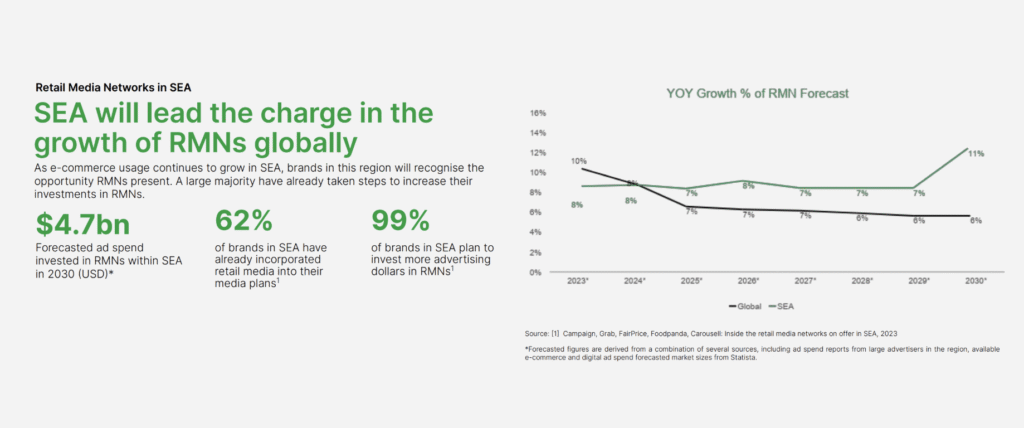
Retail media in Southeast Asia and India is moving rapidly from a specialist channel to a core part of the marketing and commerce mix. Projections show retail media ad spend in Southeast Asia growing at 11% annually to reach $4.7 billion by 2030. This momentum reflects not only an appetite for innovation but also the consistent business results already being delivered from incremental sales lift to stronger brand engagement. At the same time, retail media creates the ability to deliver more relevant, connected experiences for consumers at every stage of their purchase journey.
Yet the path to scale is not without hurdles. Differences in team structures, technology maturity, and how data connects across markets and partners can slow progress. In many organisations, trade, shopper, brand, and media budgets still operate in silos, limiting the ability to plan and execute in a truly integrated way.

As Bryan Choong, General Manager, Retail Media and Omni Growth at FairPrice Group, explains: “Org structures, teams, KPIs, and budget flows are set up separately, making convergence between trade shopper, brand, and media budgets a challenge.”
Why Fragmentation Limits Business and Consumer Impact
Southeast Asia and India’s retail landscape is uniquely complex. E-commerce giants sit alongside modern trade (MT) retailers and an extensive network of traditional trade (TT) stores. These range from global household names to powerful regional and local players who can compete head-to-head with the largest global platforms.
TT still accounts for more than half of transactions in the region, but often lacks the digital infrastructure to participate fully in retail media strategies. This creates a fundamental challenge for brands trying to achieve scale and reach across their full customer base.
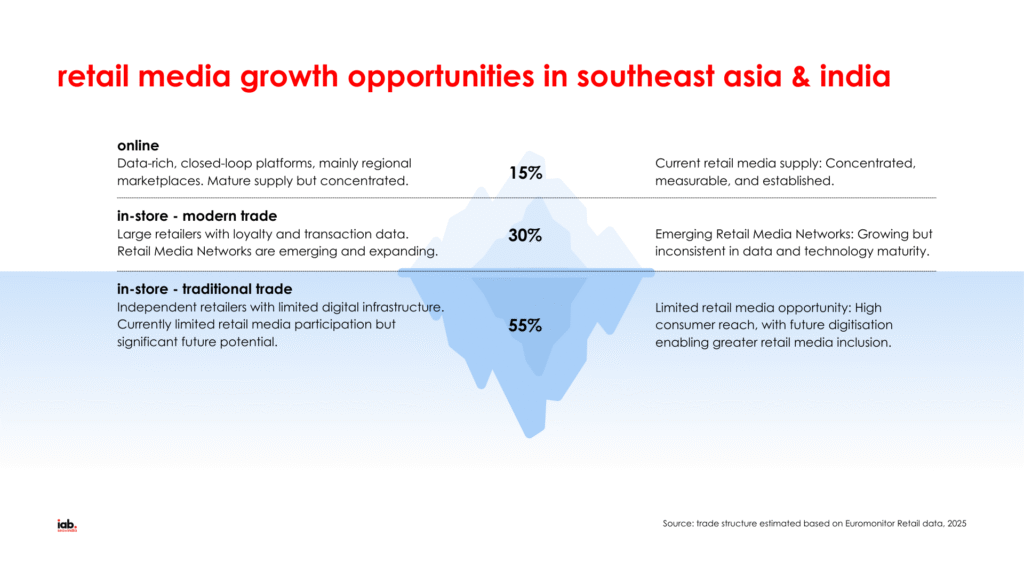
“Traditional trade stores remain largely untapped due to fragmented formats and unstructured data, and even when there’s some form of digitisation, it’s often inconsistent, which impacts how we measure and attribute performance,” notes Choong.
TT is a distinctive feature of Southeast Asia and India’s retail landscape. In many global markets, retail media discussions focus almost exclusively on MT. But in this region, TT accounts for a significant share of consumer spend and brand interaction. Recognising TT as part of the retail media ecosystem creates a unique differentiator: it ensures visibility beyond MT, capturing everyday purchase occasions and expands the addressable opportunity. With the increasing digitisation of independent SME retailers, TT is moving from “below the waterline” of retail media into the visible layer. This integration will expand the addressable opportunity, making TT a vital element of future planning frameworks.
The impact of this fragmentation shows up in campaign performance. Brands frequently run digital video campaigns to drive traffic to retailers, but if trade offers aren’t activated, traffic converts poorly. Consumers who see outdoor billboard ads then search for products on retailer apps may find competitor sponsored products with better offers, leading to inefficient budget allocation
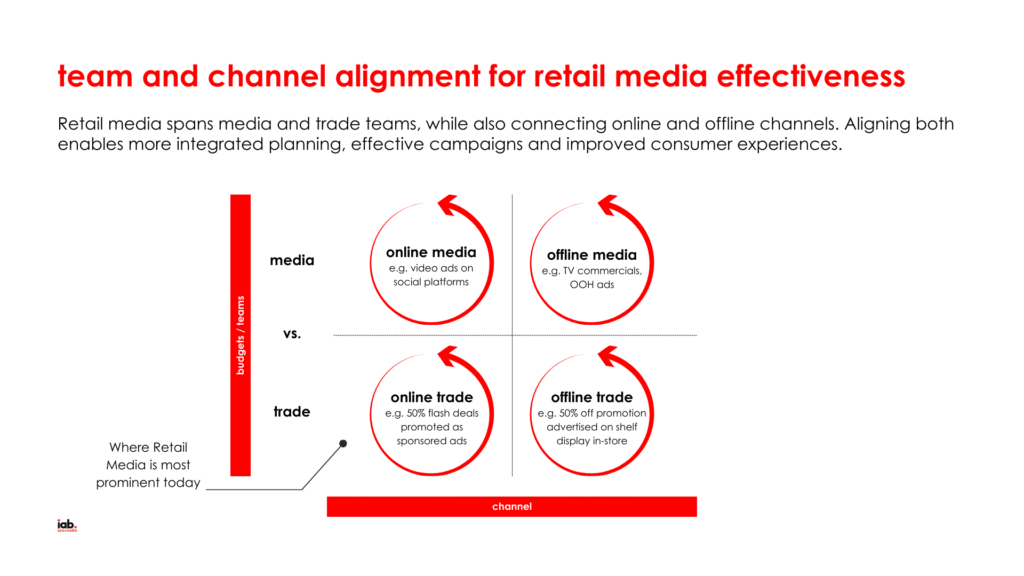
The good news is successful models and strategies already exist. When brands align their approach across these silos, they can create connected campaigns to delight consumers whilst delivering measurable business results. This shift elevates retail media from channel execution to business strategy driving scale, accelerating sales growth and strengthening consumer relevance, with the emphasis defined by each brand’s business objectives.
Three Solutions for Breaking Silos
While these challenges are real, they are far from insurmountable. The diversity and complexity of Southeast Asia and India’s retail landscape also create opportunities for brands, agencies, retail media networks (RMNs), and technology partners to collaborate in new ways. The opportunity to improve retail media effectiveness comes from better alignment rather than complete system overhaul.
Strategy 1: Aligning Trade and Media Marketing for Full-Funnel Campaigns
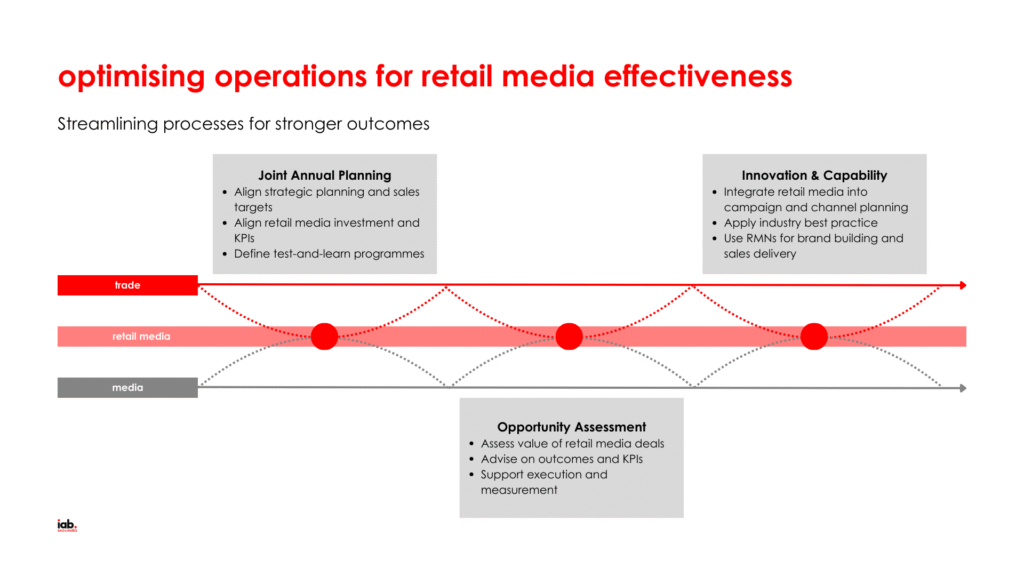
When trade and media marketing teams work together, they can align budgets, KPIs, and timelines to link brand-building with retail execution. From an organisational perspective, The Coca-Cola Company in Southeast Asia adopted a “centre of excellence” model to bridge silos among shopper, brand, and media teams. Through this shared hub, they coordinated cross-channel campaigns syncing in-store activations with digital media investments, achieving greater consistency, reduced duplication, and amplified impact across both modern and TT.
From a campaign execution perspective, FairPrice Group and The Trade Desk ran a campaign for Tiger Beer integrated online media with digital out-of-home touchpoints, linking ad exposures to purchase data This joint planning bridged silos, optimised media investment, and delivered measurable sales lift alongside brand engagement.
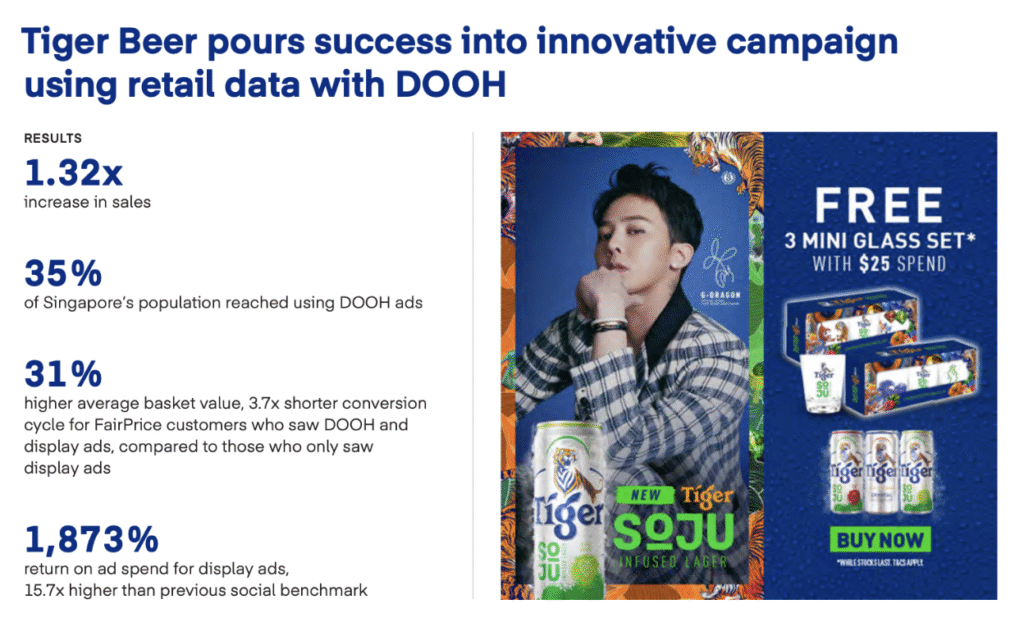

As Vivek Misra, Senior Director of Data Partnerships at The Trade Desk, observed: “This was an incredible campaign because the client was able to tie back a conversion happening in store for an ad exposure which happened on a screen. This was almost like a collaboration of the agency and the brand and the partner coming together to solve for it in the right fashion.”
Implementation involves three main intervention points:
Joint Annual Planning Sessions: Retail media requirements are integrated into trade discussions with retailers, ensuring media capabilities are factored into negotiated terms from the start.
Ad-Hoc Opportunity Assessment: Media specialists evaluate trade activations for additional value creation, identifying moments where digital amplification can boost in-store performance. Flash deals and short-term activations may generate fast sales lifts, but they deliver the greatest value when tied back to the broader planning pillars that guide full-funnel strategy.
Innovation Capability Sessions: Teams collaborate on scaling best practices, ensuring successful tactics can be replicated across different retailers and markets.
Strategy 2: Extend Digital Capabilities into Traditional Trade
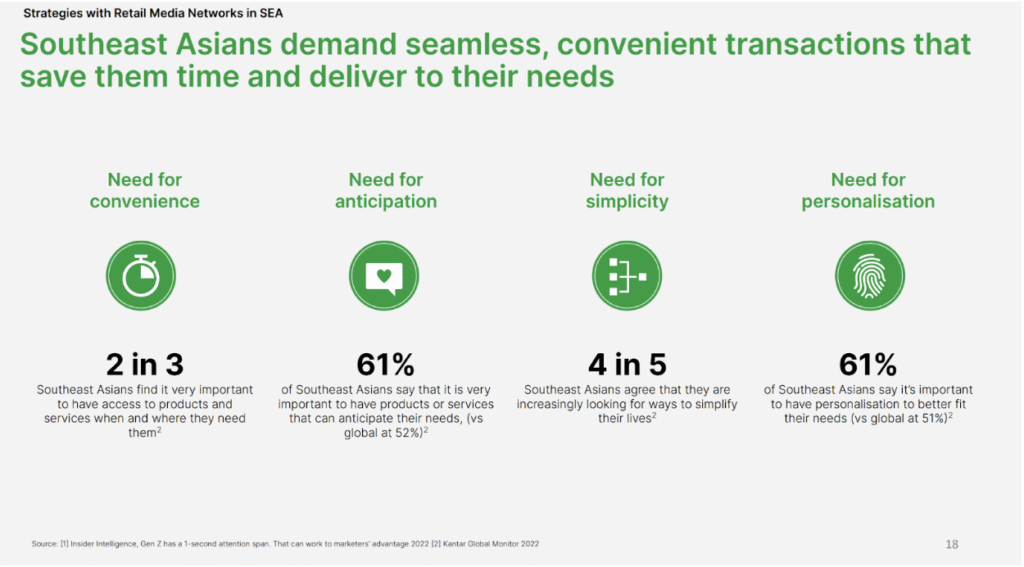
TT accounts for over half of transactions in the region but is often excluded from retail media strategies. Digital enablement in TT allows stores to collect and activate data for targeted offers and media placements.
Grab and Kantar research found 61% of Southeast Asian consumers value personalisation and expect retailers to anticipate their needs. This creates opportunities for traditional retailers to participate in RMNs through improved data collection and digital integration.
FairPrice Group connected out-of-home screens with in-store purchase data, using POS insights to refine targeting and attribution. This integration improved speed to market and consistency in measurement. “It’s about 23% of the in store transactions happen with consumers engaging with the app prior,” Choong explains. “So we do see almost 25% of that behavior where consumers browse online and then transact in the store.”
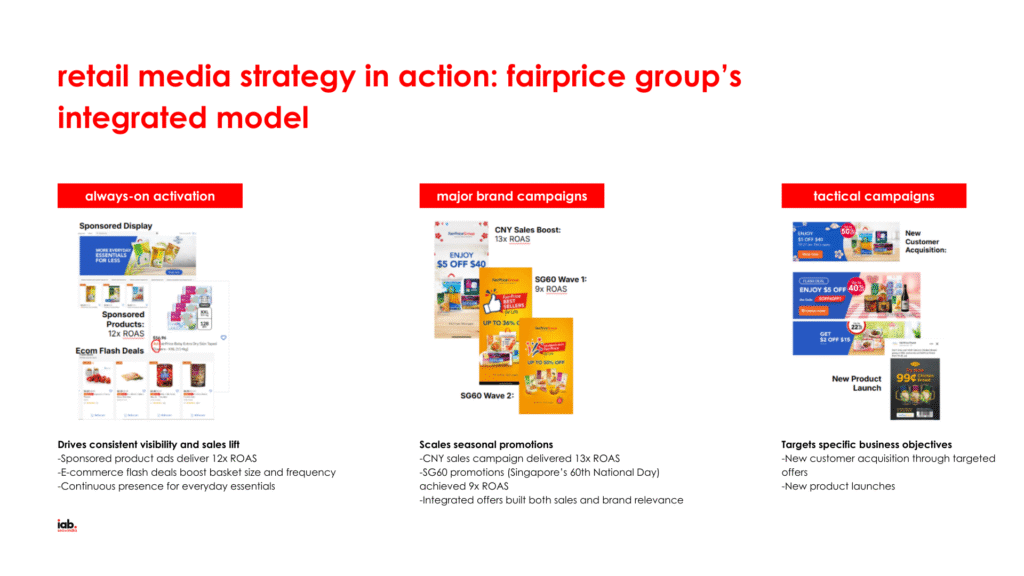

Uma Ranganathan, Head of Solutions Development at Dentsu, emphasises the measurement opportunity: “Retail media’s superpower is the fact that it can offer close loop measurement right down to a conversion which is the purchase. But if you look at consumer behaviour, a lot of browsing happens online, and people are not necessarily converting, but there is a lot of value for the brand to target me and take on more of the upper funnel responsibilities.”
The digital enablement process involves three key steps:
Data Collection Infrastructure: Installing basic digital touchpoints (QR codes, apps, digital payment systems) to allow traditional retailers to capture customer interaction data.
Targeting Integration: Using collected data to inform programmatic advertising ecosystems allowing traditional stores to compete with MT for media investment.
Attribution Connection: Linking exposure data from digital channels to in-store purchase outcomes, creating closed-loop measurement proving retail media effectiveness.
Strategy 3: Understand Different Partner Systems and Tools
The diversity of retail partners across the region means brands are working with a wide spectrum of systems, creative requirements, and data formats. This variety can add layers of complexity to campaign planning and execution, but it also creates opportunities to tap into unique platform strengths. The most effective brands focus on understanding how each RMN’s capabilities can advance their consumer engagement and brand objectives.
From global household names to powerful regional and local players, each RMN brings its own approach to audience targeting, creative delivery, and measurement. Recognising and working with these differences allows brands to create both tailored and scalable campaigns.
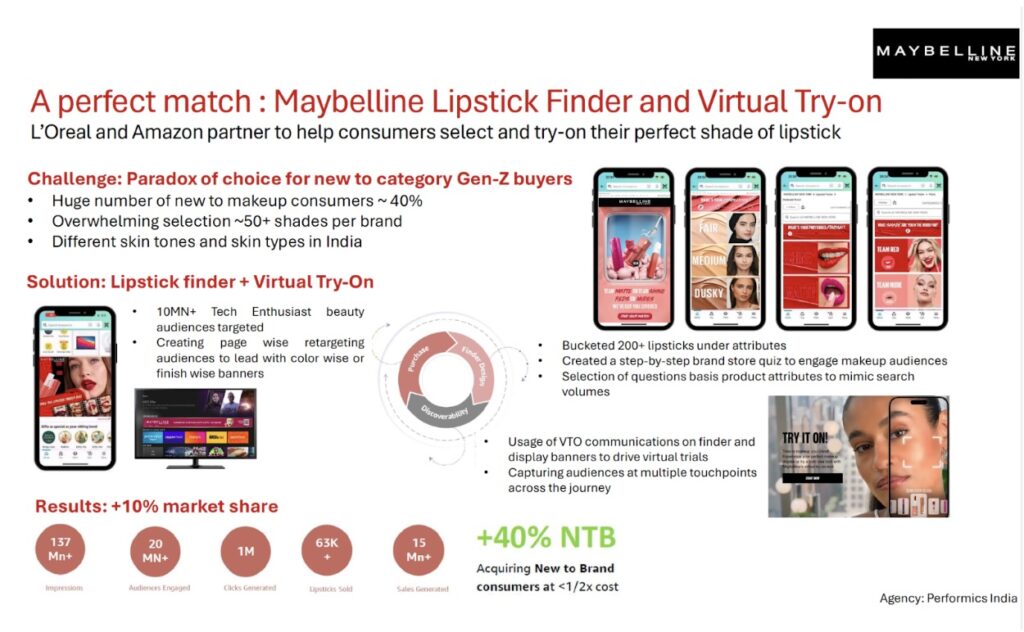
Publicis Media and Amazon’s Maybelline Lipstick Finder combined virtual try-on technology with Amazon India’s e-commerce systems, creating a smooth path from engagement to purchase and lifting conversions while creating a unique consumer experience. By making the most of specific platform capabilities, brands can create more connected campaigns and deliver measurable outcomes.
This systematic approach includes:
Platform Capability Mapping: Understanding each RMN’s unique strengths (audience reach, data depth, creative formats, attribution capabilities) to match campaign objectives with platform advantages.
Creative Adaptation Workflows: Developing efficient processes to adapt creative assets across different platform specifications whilst maintaining brand consistency and message effectiveness.
Unified Measurement Framework: Define metrics linking your business priorities to campaign performance, allowing results to be compared in ways that support decision-making while respecting each platform’s attribution approach. This can be a challenging task, but establishing even a baseline framework provides the foundation for consistency.
Consumer-First Retail Media Creates Competitive Advantage
When brands, retailers, agencies and technology partners collaborate effectively, retail media becomes a consistent driver of both commercial and brand outcomes across the region while putting consumer experience first.
As Choong emphasises: “The opportunity now is to scale what’s working, not just test what’s possible.

Alin Popescu, Head of Commerce Strategy, APAC at WPP Media adds: “When we connect the dots across the ecosystem, retail media becomes a multiplier for every other channel.”
By aligning trade and media marketing teams, extending digital capabilities into TT, and understanding how different RMNs meet brand goals, companies are achieving faster conversion, stronger brand impact, and more efficient execution across Southeast Asia and India’s diverse retail landscape.
The region is ready for the next phase of retail media growth, breaking down silos to create more connected consumer experiences and deliver measurable outcomes that strengthen brand and business performance.
Glossary:
- Online: Digital retail channels where transactions occur, including e-commerce platforms and marketplaces like Grab, FairPrice online, and Amazon
- Modern Trade (MT): Organised retail formats including supermarkets, hypermarkets, and department stores
- Traditional Trade (TT): Independent retailers, corner stores, and mom-and-pop shops
- Retail Media Networks (RMNs): Advertising platforms operated by retailers that monetise their customer data and ad inventory across digital and physical touchpoints
want to read more insights from the iab sea+india retail media council?
The IAB SEA+India Retail Media Council brings together expert insights and real use cases of Retail Media across the region, helping the industry navigate opportunities in Southeast Asia and India.