

The IAB SEA+India AI Council brings together leaders from across the digital marketing ecosystem to address the region’s most critical AI implementation challenges and opportunities. Members lead presentations and discussions on priority topics, with the IAB SEA+India team developing these into features to share the Council’s insights and guidance with the wider industry.
Presenters: Ibrahim Merican, Magnite and Rohiet Ghildyaal, Eyeota, a Dun & Bradstreet Company
Discussion Participants: Aileen Chua, RTB House; Bharat Khatri, Omnicom Media Group; Divya Acharya, WPP Media; Emir Caglayan, WPP Media; Haroon Qureshi, Mindshare; Joseph Lee, PubMatic; Lee Smith, Omnicom Media Group; Marc Holloway, Smartly; Matthew Drury, Meta; Miranda Dimopoulos, IAB SEA+India; Nikhil Motwani, WPP Media; Priya Bhatia, OpenX; Ryan Pham, Google; Shubham Dubey, The Coca-Cola Company; Vivek Saxena, InMobi.
TL;DR: AI processes and connects behavioural signals to find valuable audiences, evaluates thousands of inventory sources for performance patterns and identifies which signal combinations predict campaign outcomes from awareness through consideration to purchase. The result is new growth segments and better campaign performance across seven complex markets.
A Region Where The Complexity Becomes the Advantage
Media planning in Southeast Asia and India spans seven major markets, each with distinct regulations, thousands of inventory sources and multiple identity solutions.

Planners face what Ibrahim Merican, Lead, Demand Account Management, Asia at Magnite, describes as beyond human capacity: “I don’t think there’s any individual who’s very comfortable to say that I know from the back of my head, what’s the requirement for all these seven markets, and at the same time also keep up to date with the different developments, rules, legislation.”
This fragmentation makes the region a natural place for AI-led planning. Solutions must work across multiple languages, different regulatory frameworks, platform-specific ID systems, and signals coming from thousands of supply sources.
What emerges is not just the ability to manage complexity but to see new possibilities. AI makes it possible to connect signals that marketers would not usually place together: young female professionals driving recall for electric vehicles, finance content outperforming business titles on lifestyle sites, or entertainment apps delivering stronger afternoon engagement than news in the morning. These kinds of discoveries happen when technology can test thousands of combinations simultaneously.

“What SEA and India have is a hotbed of AI development,” says Rohiet Ghildyaal, AVP, Business Development at Eyeota, a Dun & Bradstreet Company. “Given rising digital ad spend and the need for precision, the region is a great testing ground for AI-led innovation.”
Three Ways AI Expands Planning Possibilities
Strategy 1: Refining Audiences Through Real-Time Signal Combinations
With AI led planning, marketers can move away from just using traditional signals like age, gender and location to combine it with real time signals based on browsing patterns, content affinity, purchase timing and engagement contexts. This combination of signals enables more refined audience-based planning.

“Many of us, as a single person, fall into many buckets of audience,” explains Aileen Chua, Managing Director, Southeast Asia at RTB House. “Like myself, I can be a traveller, I can be a mom, I can be a PMET. It’s actually based on real-time signals that determine the audience. With first-party data, that’s where the AI is able to get the signals in order to enable very precise understanding.”
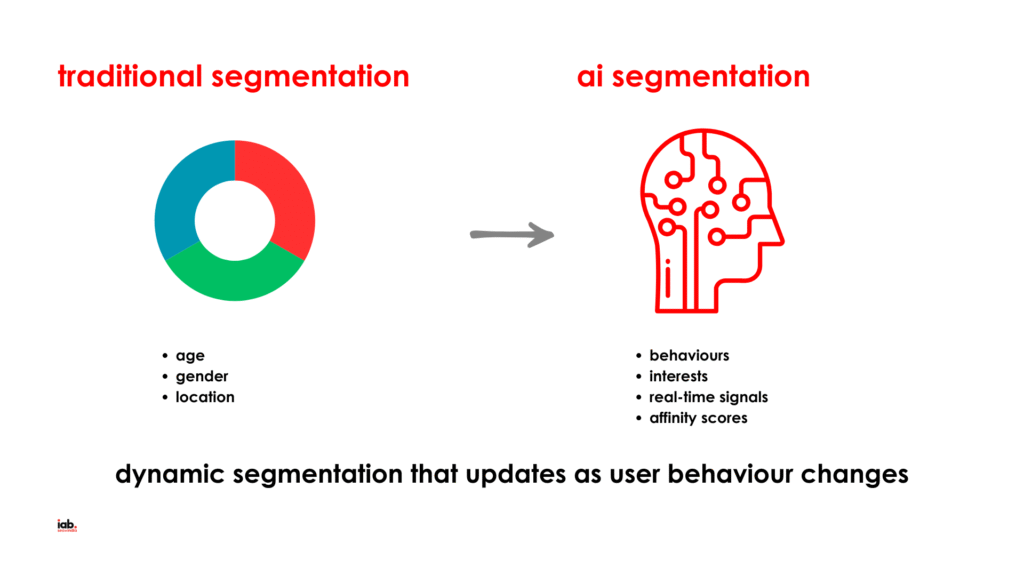
AI is extending what planners can already do by testing thousands of behavioural combinations at once and showing which ones are most closely tied to outcomes.
Eyeota, a Dun & Bradstreet Company’s client, a luxury car brand, illustrates this shift. By combining income data with lifestyle signals through AI, they identified that young female professionals drove 90% of ad recall uplift. These women were not responding to status-led messaging; they viewed electric vehicles as technology investments, researched extensively on weekday evenings, and engaged most with sustainability content. The brand reframed its positioning around smart technology, opening a valuable new growth segment.
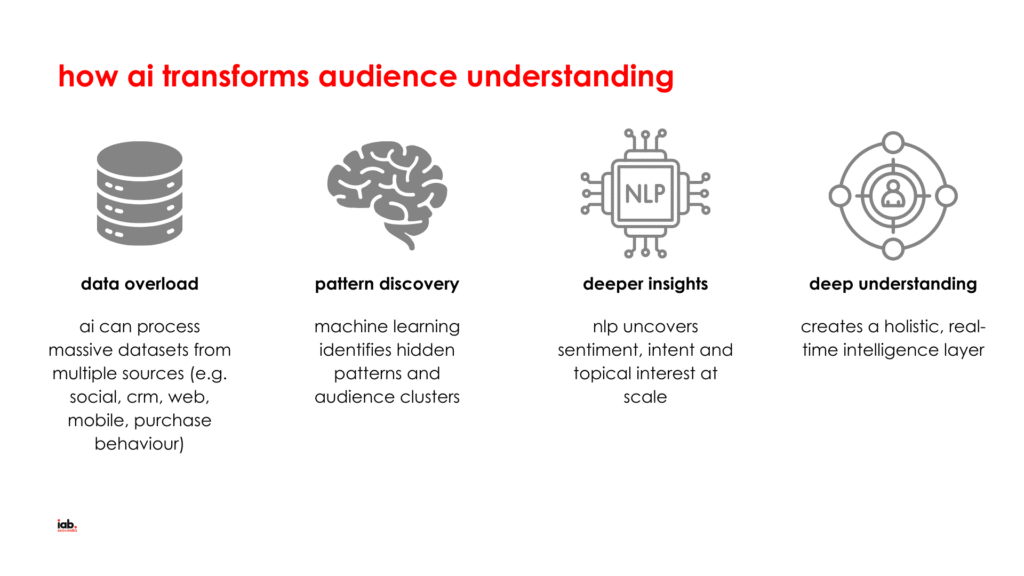
“AI can process large amounts of data with multiple offline and online sources,” explains Rohiet. “Using machine learning, it layers on deeper insights, looks at hidden patterns to enrich the audience traits, which then can help planners create a more real-time intelligent layer of audience planning.”
Other auto campaigns show similar discoveries. Ogury’s Mercedes-Benz Malaysia campaign achieved a 71% view-through rate after AI identified “luxury experience collectors” through travel booking behaviour and premium service subscriptions rather than automotive content. These audiences valued exclusive experiences over ownership, inspiring creative campaigns focusing on the journey, not the car.
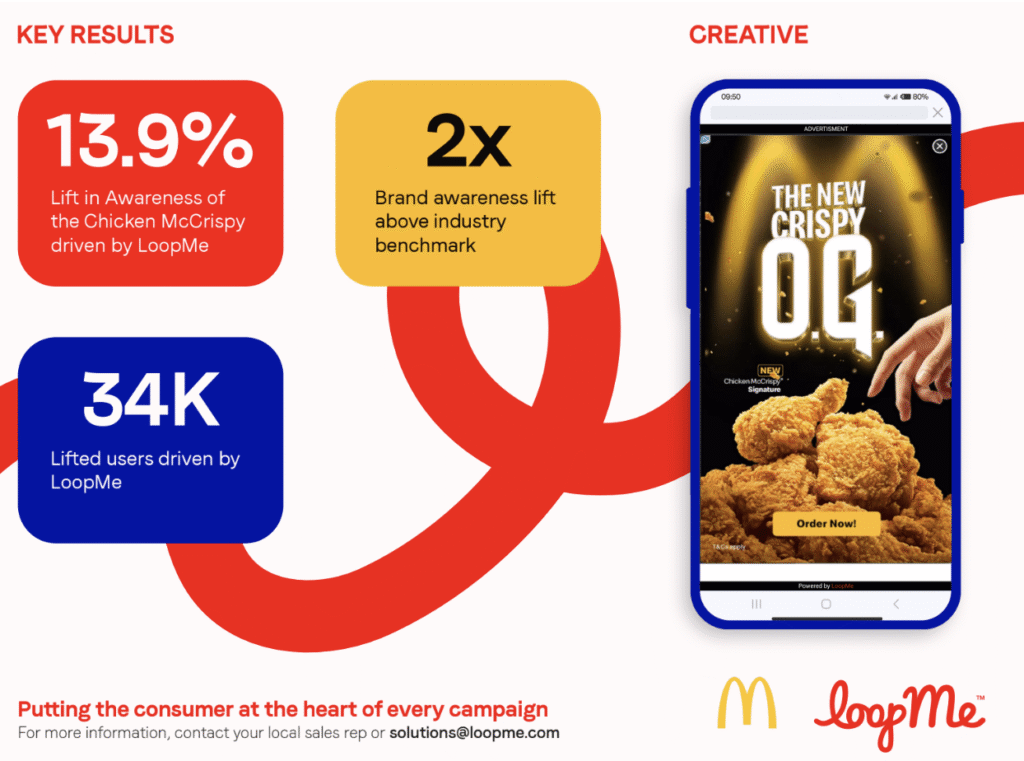
LoopMe and McDonald’s demonstrated how AI can refine competitive positioning. Using PurchaseLoop Audiences, LoopMe’s AI-driven segmentation product, the campaign identified fried chicken lovers who preferred non-spicy variants, delivering a 13.9% awareness lift – twice the industry benchmark. Rather than targeting chicken lovers broadly, the campaign isolated the flavour preference that matched McDonald’s product, demonstrating that competitive lift comes from the detail of signal matching, not the breadth of category reach.

WPP Media is approaching the same opportunity through agentic AI that continuously learns and adapts. “Now we create AI agents that do that curation and translate that into actionable segments,” explains Nikhil Motwani, Senior Director at WPP Media. “You get strategic planning as well as tactical segments that buyers would then use.”
Across categories, the same pattern emerges. Travel brands find that “parents researching schools” book more family holidays than “frequent travellers,” because school research triggers broader lifestyle planning. Financial services see that “multiple subscription users” convert more reliably for credit cards than “high income” segments, as subscription behaviour signals comfort with recurring payments. These audiences always existed, but now AI can connect the dots across disparate signals to make them visible.
Strategy 2: Inventory Opportunities Hidden in Plain Sight
As AI refines audience discovery, it is also changing inventory curation. Southeast Asia and India’s digital ecosystem spans thousands of quality inventory sources, each with distinct audience behaviours and contexts. AI’s ability to assess these simultaneously reveals performance patterns that may otherwise remain hidden.
“Planning will be simpler,” predicts Ibrahim: “AI-led planning will simplify this complexity for us to focus more on how I can generate better sales than the technicalities to achieve it.”. The emphasis moves away from placement mechanics and toward business outcomes.
Platform tools are accelerating these capabilities; The Trade Desk’s Kokai scores inventory and recommends deals automatically and StackAdapt’s Ivy assistant allows planners to ask natural-language questions such as “What sites work best for finance audiences in Indonesia?” to receive instant recommendations with CPM benchmarks. For marketers, this means ideas can be tested in minutes rather than days, within the same meeting where the question is raised.
Ibrahim sees this developing further: “Eventually, AI is going to give you more of the better performing inventory automatically, similar to an audience segment that can help drive better performance quality and scale.” Magnite Segments classifies inventory across domains and apps, packaging recommendations to match campaign briefs. Their campaign with Nescafé Sugar Free achieved strong results, with 97% brand consideration alongside 78% sales growth, by using AI to identify contextually relevant media that reached health-conscious consumers in channels well beyond fitness sites.
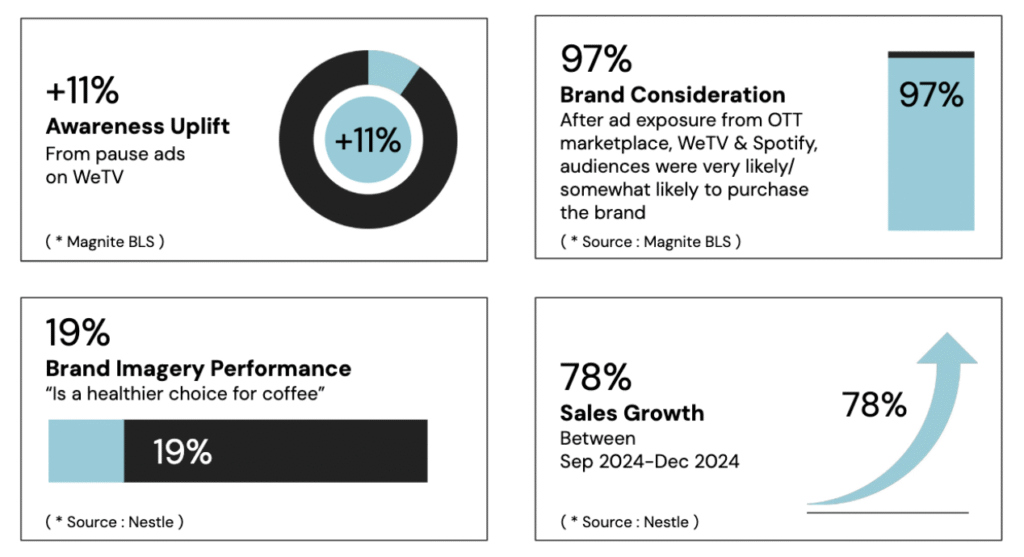
These consumers were found not just on fitness sites but across parenting blogs, professional development content and lifestyle platforms. The insight for marketers: consideration moments can occur in places that aren’t usually associated with the category. In this case, health-related choices appeared on parenting blogs when families researched nutrition and within professional content that discussed wellbeing. Without AI connecting these less obvious contexts, brands could miss high-intent moments entirely.
Strategy 3: Connecting Signals To Drive Desired Outcomes
Beyond finding audiences and inventory, AI identifies which signal combinations move users through the marketing funnel and qualify them at each stage. Campaigns achieve their objectives while maintaining strong engagement throughout the customer journey.
“AI can process large amounts of data with multiple offline and online sources,” explains Rohiet. “Using machine learning, it layers on deeper insights, looks at hidden patterns.” A single signal might mean nothing, someone visiting a travel site, but combined with school research, salary deposit timing, and previous booking patterns, it predicts family holiday purchases.
Working with Google, Grab applies this signal combination approach across Southeast Asia to identify high-value users. By analysing which behavioural patterns predict frequent transactions, they achieved a 19% increase in daily transacting users and 9% lower acquisition costs in Indonesia. The insight wasn’t just finding active users but identifying which specific behaviour sequences predict long-term value, enabling Grab to optimise both acquisition and retention simultaneously.
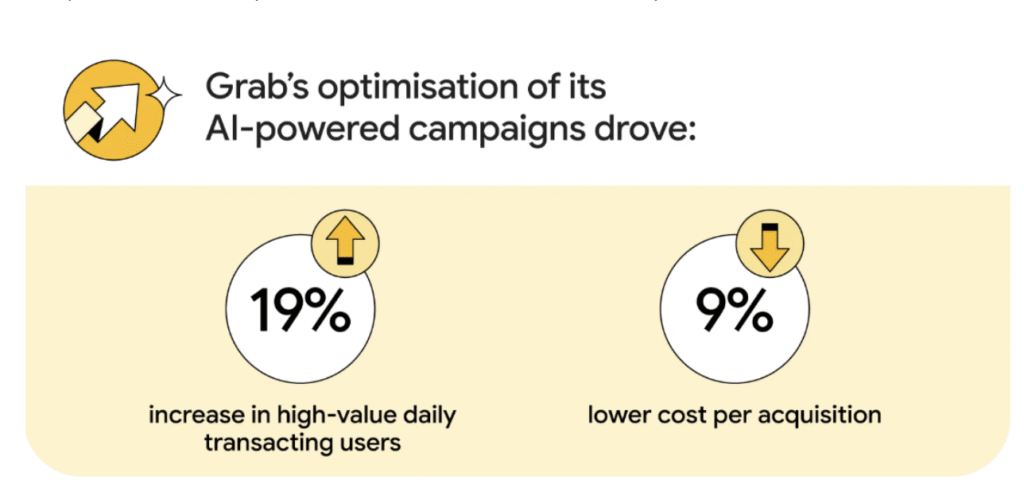
For marketers, this means recognising real intent through signal combinations rather than targeting assumed intent. AI identifies which signals, in which combinations, at which moments, predict campaign outcomes.
Capability Creating Opportunity
The complexity of Southeast Asia and India’s markets has become a strength. Planning here involves multiple countries, varied regulations and thousands of inventory sources. This environment creates advanced capabilities that can perform under conditions more demanding than in many other regions.
These capabilities change how marketers allocate budgets. Creative strategies adapt when AI connects behaviour combinations to campaign objectives. Media plans expand when AI discovers performance outside endemic placements. Daypart strategies adjust when AI evaluates inventory across thousands of sources, showing where attention and decisions really happen. Marketers are free to focus on strategy and growth while AI processes the operational complexity.
The opportunities extend far beyond individual campaigns. Marketers using AI-powered planning gain advantages in market entry, competitive positioning, and audience expansion as they identify valuable segments through behavioural combinations, find performance in unexpected inventory contexts, and connect complex signal patterns that predict outcomes.
In Southeast Asia and India, market complexity multiplies opportunities for insights, creating new ways for brands to connect with consumers and achieve their business objectives.
want to read more insights from the iab sea+india ai council?
The IAB SEA+India AI Council brings together expert insights and real use cases of AI across the region, helping the industry navigate opportunities in Southeast Asia and India.