
The IAB SEA+India Retail Media Council brings together commerce specialists from across the digital marketing ecosystem to address the region’s most critical retail media challenges and opportunities. Council Members lead presentations and discussions on priority topics, with the IAB SEA+India team developing these into features to share the Council’s insights and guidance with the wider industry.
Presenters: Mehul Mandalia, Co-founder and Head of Platform Solutions at Moving Walls and Sumit Kumar, Director, Global Growth Programs at Tyroo.
Discussion Participants: Bryan Choong, General Manager Omnichannel COE at FairPrice Group; Mark Turner, Vice President, GroupM Affiliate; Miranda Dimopoulos, IAB SEA+India; Sarah McGann, Head of Strategic Accounts, Singapore and India, LinkedIn; Uma Ranganathan, Head of Solutions Development, Dentsu; Vivek Misra, Senior Director, Data Partnerships, The Trade Desk.

TL;DR: Non-endemic brands are rapidly adopting retail media across Southeast Asia and India, drawn by the precision of first-party shopper data. Sectors from finance to government are proving that retail networks can deliver measurable outcomes and this signals retail media’s evolution into a strategy where every advertiser can achieve growth.
Deterministic Data Without Distribution: Why Non-Endemics Are Retail Media’s Fastest Growing Segment
Retail media in Southeast Asia and India is no longer only for products sold through retailer apps, websites, or stores. Non-endemic brands from banks and insurers to automotive, travel, and government are already using it to act on authenticated shopper signals. Everyday purchases can highlight when a customer may benefit from new financial services. A supermarket trip can trigger a test-drive lead. And purchase data can show when government health campaigns are helping more families make better lifestyle choices. With e-commerce marketplaces capturing 30-35% of total retail spending across Southeast Asia and platforms like Amazon India reaching 100+ million users with over 1,000 audience segments, retail media has become a growth channel where non-endemic brands achieve precision targeting and ROI at scale.

“Non-endemics are already doing it across geos and sectors. This is not in the realm of possibility but already a demonstrated theme,” emphasises Mehul Mandalia, Co-founder at Moving Walls.

This rise comes from the quality of the data “There is no reason for an advertiser to think about it as another high-quality data source, it is higher in quality than many others,” observes Vivek Misra, Senior Director at The Trade Desk. “For the first time, now they have a signal which is more deterministic. From a strategy perspective, there is no reason for them not to use that signal from a retailer.”
The opportunity extends beyond digital and retailers across the region are fielding RFPs “every other week” for in-store retail media networks, according to Mandalia. From Vietnam’s dense network of retail screens to India’s 800 million annual store visits, physical retail environments across the region are becoming digitally enabled media channels. The infrastructure for non-endemic growth is expanding fast, giving brands new ways to reach purchase-ready consumers through retailer first-party data.
From Purchase Patterns to Payment Data: How Non-Endemics Target Through Retail Media
For non-endemic brands, the appeal of retail media isn’t just reach, it’s the quality of signal enabling contextual relevance. Retail media provides deterministic data from actual purchase behaviour at scale, allowing brands to connect with consumers at precisely the right moment with the right message.

“FairPrice data is authenticated data. It is deterministic,” notes Mark Turner, Vice President, Affiliate and Partnership Marketing, APAC at WPP Media. “They’re able to figure out young families from what they are buying. This is a better quality signal for us.”
This precision enables non-endemic brands to achieve what cluttered media environments often prevent: contextual relevance making their messages stand out. Retail media networks across Southeast Asia and India offer data categories non-endemic brands activate to create these contextually relevant moments:
- Purchase Frequency and Value Tiers: Banks and insurers no longer rely on broad demographics; they match products to actual shopping behaviour; frequent international travellers are offered no-FX cards, while high-volume household shoppers qualify for cashback programmes. Premium buyers are targeted with concierge services and lifestyle perks that mirror their spending patterns.
- Life Stage and Intent Signals: Platforms identify life moments through purchase patterns. When someone starts buying baby products, that triggers opportunities for insurance, larger vehicles and home loans. MyGate, an app managing condominiums in India, partnered with Google Pixel for targeted launches. “The purchase has to happen on Flipkart, but the product is like a thousand dollar product,” Kumar shares. “You know that this particular condominium has high net worth individuals.”
- Seasonal and Event Behaviour: During mega-sales like 11.11, platforms identify engaged shoppers and high-value customers. Financial services use these moments to offer relevant payment solutions such as cashback cards for frequent shoppers, installment plans for large purchases, or rewards programmes aligned with shopping patterns.
- Cross-Category Intelligence: Purchase patterns across categories help brands offer more relevant products. Someone buying premium groceries and imported goods might appreciate premium credit card benefits like airport lounge access or international transaction perks. Banks use these signals to match card features with actual shopping habits, ensuring customers receive offers aligned with their lifestyle.
- Location and Merchant Patterns: Payment networks track where and when purchases occur, enabling powerful location-based targeting. This enables QSR brands like McDonald’s to identify competitor customers, for example someone who frequently dines at Burger King becomes a prime target for switching campaigns. Automotive brands use fuel station purchase patterns to identify car owners versus public transport users.
- Platform Engagement Depth: Moving Walls tracks audience segments, dwell time, and attention in physical stores. “The in-store opportunity for non-endemics keeps growing as just about every venue from supermarkets and convenience stores to electronics and specialty stores get canvassed by digital signage. We are working with partners like Prowtech (Vietnam) and ADM (APAC) in this region to enable advertisers to tap into purchase habits, incremental reach, and lift metrics for in-store media. “Retail media networks give us a lot of deterministic data, which is a very important factor for any marketer,” emphasises Mandalia. “The confidence level is very, very high, and marketers are able to calculate that ROI, irrespective of whether the end sale has happened or not.”
E-commerce Platforms to Physical Stores: How Non-Endemics Change Behaviour and Build Brand Presence
Non-endemic brands across Southeast Asia and India are discovering expanded opportunities as the boundaries of who qualifies as “non-endemic” continue to shift.

“The minute we look at players like Grab or Gojek or Uber as retail media… The definition of non-endemics changes depending on what platform you’re using,” observes Uma Ranganathan, Head of Solutions Development at Dentsu. “CPG brands are suddenly non-endemics on those platforms.”
This fluidity multiplies the opportunity: brands that don’t sell via retailers can now advertise across every retail touchpoint, while traditionally endemic brands become “non-endemic” on ride-hailing platforms where they have no direct sales. The result is an expanded playing field where more brands can access retail media’s deterministic data advantage across more platforms than ever before.
The following examples demonstrate how brands are activating across this expanded ecosystem, from pure digital campaigns to omnichannel executions to in-store networks. Each approach taps into different consumer moments and behaviours, all leveraging retail’s first-party data for measurable business outcomes.
1. Digital First: Apps and Ecommerce Success Stories

E-commerce platforms offer non-endemic brands something they can’t get anywhere else: logged-in users with complete purchase histories and active shopping intent. “There is no better place than an Amazon or Flipkart where you have all the transactional data available for the consumer,” explains Sumit Kumar, Director at Tyroo, discussing why financial services prioritise these platforms.
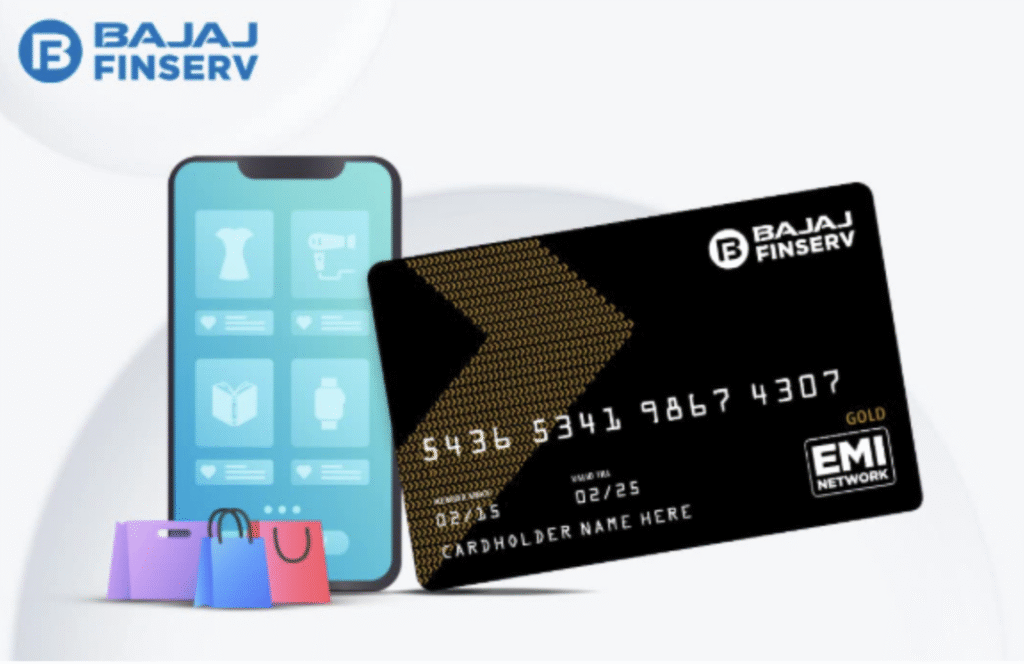
For Bajaj Finserv, India’s largest NBFC (Non-Banking Financial Company), Bajaj Finserv wanted to scale credit card acquisition without relying on income proxies. Partnering with Amazon Ads, they focused on high-value SKUs such as mobile phones, wearables, and electronics. Ads appeared on transaction success pages and during payment method selection, placing offers directly in front of consumers at the point of purchase. The campaign delivered 262 million impressions, 28,000+ new sign-ups, and cut acquisition costs by 50 per cent. Conversion rates rose by 27 per cent thanks to Amazon’s first-party signals of purchase and payment behaviour, proving how closed-loop targeting can outperform traditional financial marketing.
This reach demonstrate how retail media solves the reach-versus-precision trade-off; Bajaj Finserv accessed Amazon’s massive user base whilst maintaining targeting accuracy through first-party purchase signals.
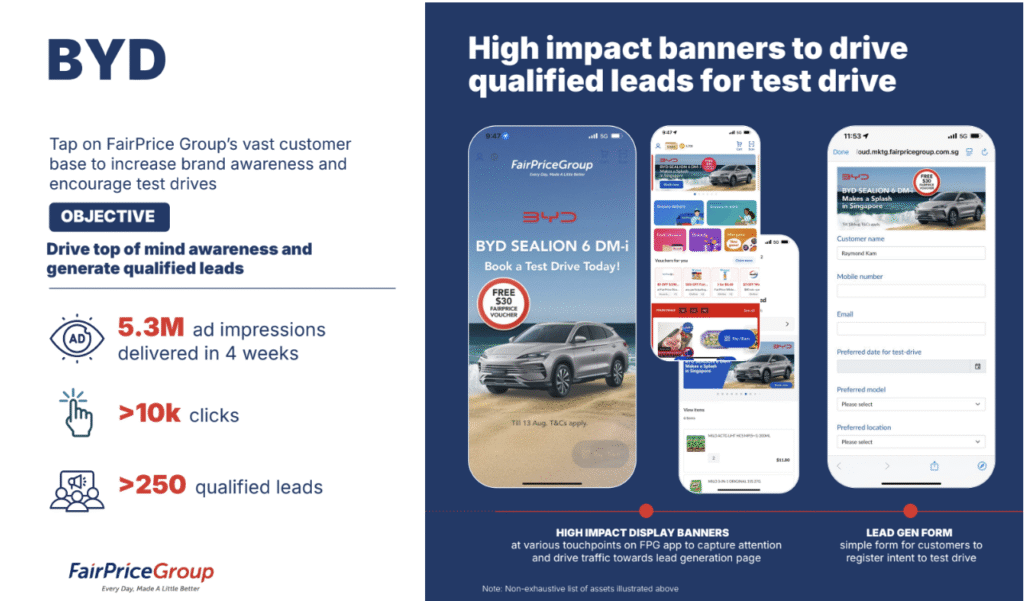
Automotive brands use a different angle; location intelligence combined with shopping patterns. BYD’s campaign through FairPrice Group generated 250 qualified test drive leads from 5.3 million impressions in just four weeks. The key was targeting grocery shoppers who lived or worked near BYD showrooms, turning routine shopping trips into test drive opportunities.
One of the world’s largest sports apparel companies faced stagnation in affiliate sales dominated by coupon and cashback partners. Working with Tyroo, they shifted spend into quick commerce. By offering flat-discount coupons during seasonal shopping spikes, they reached high-intent buyers at checkout. The result: a revived revenue stream. “We distributed 50% discount coupons during peak season,” Kumar explains, “this helped us achieve around 10 to 15% incremental growth during that particular season.” The ability to reach customers at the moment of purchase intent, even for unrelated categories, transforms conversion rates.
“The lesson,” Kumar adds, “is that reaching customers when they are in an active purchase mindset, even if it’s for unrelated categories, transforms conversion rates.”
2. Omnichannel Integration: Connecting Digital Insights to Physical Results
When brands can connect online behaviour to offline outcomes – tracking store visits, deliveries, and purchases – retail media solves one of marketing’s perpetual challenges: proving that advertising drives sales. This closed-loop attribution transforms how non-endemic brands measure success, moving from hoping for impact to knowing exactly what works.
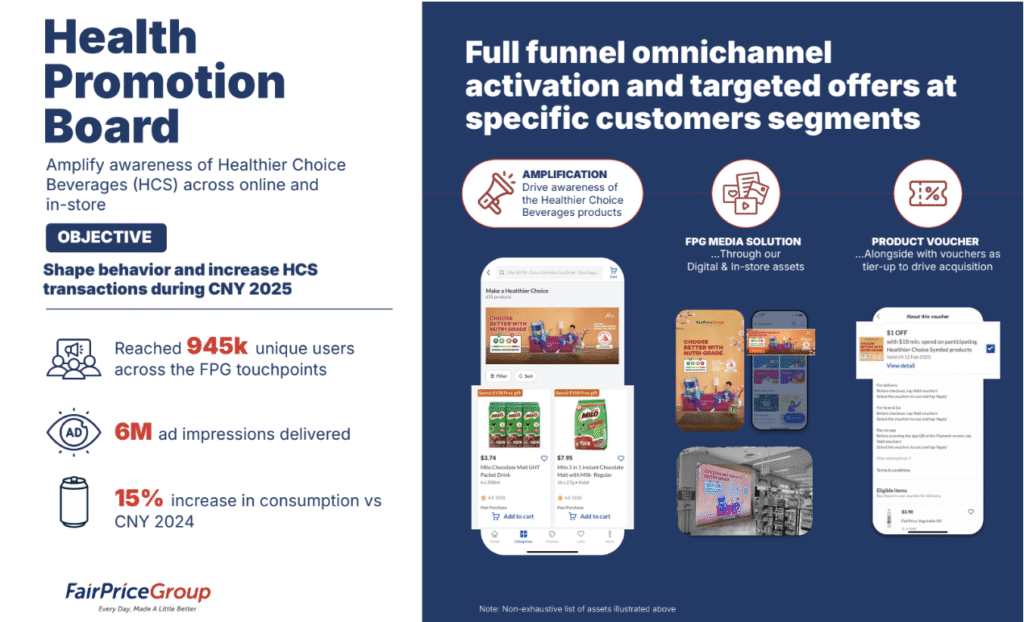
Government agencies use this same capability for social impact. Health Promotion Board’s Chinese New Year 2025 campaign with FairPrice Group reached 945,000 unique users from FairPrice’s millions of weekly shoppers and drove a 15% increase in Healthier Choice beverage consumption.

“We can tell them how many people have started buying healthy products, tracking the number of new customers activated during the campaign,” explains Bryan Choong, General Manager, Retail Media and Omni Growth at FairPrice Group. “Behaviour shaping takes time, but now even for the health promotion board, there’s a form of closed loop attribution.”
Coca-Cola combined digital engagement with physical activation through Grab’s superapp ecosystem. In Metro Manila, 50,000 Coke Zero samples were bundled with GrabFood orders, turning meal delivery into product trials. In Singapore, “Coke&Go” smart coolers linked with the Grab app for cashless payments, tying digital ad exposure to vending machine sales. In Vietnam, Grab even replaced its driver map icons with Coke branding, embedding brand presence into a daily ritual. These activations worked because superapps control multiple touchpoints; who you are, where you are, and what you’re doing, enabling targeting and measurement impossible in traditional media. Grab’s presence across 8 countries and 500+ cities means these campaigns achieve both local relevance and regional scale.
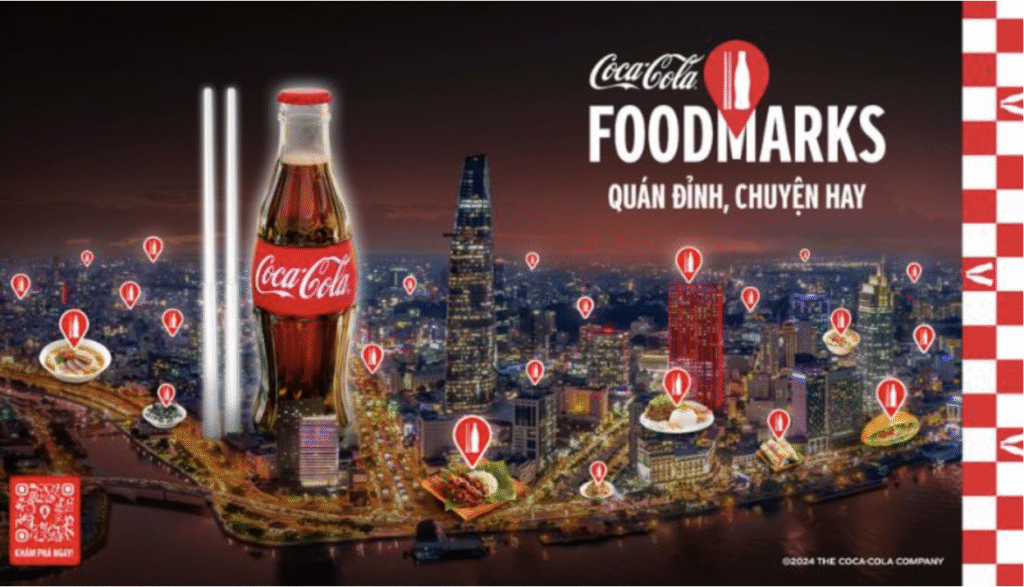
Together, these examples show how omnichannel retail media is not just about expanding reach but about linking moments across platforms and environments. For governments, it means proving social campaigns are shifting behaviour. For brands, it means verifying product trial and loyalty in ways no other channel can match.
3. In-Store Media: Capturing 460 Million Consumers at the Point of Decision
In-store retail media offers non-endemic brands an edge that purely digital channels cannot: reaching consumers during the 30–45 minutes they spend actively shopping. Moving Walls, working with partners across Vietnam and India, now connects with more than 460 million consumers through digital retail networks. FairPrice in Singapore has also begun rolling out its Store of Tomorrow initiative with video POS banners, shelf screens, and smart carts, giving advertisers new measurable formats inside the store environment.
“BFSI brands were among the first to recognise the value of in-store media,” observes Mehul Mandalia, Co-founder at Moving Walls. “Even though no one is buying a credit card in a supermarket, these ads plant seeds in a captive audience and can later trigger sign-ups online or at the bank.” Financial services understood early that grocery shoppers are also mortgage seekers, insurance buyers, and credit card users, they just needed the right moment to connect.
Vietnam’s market demonstrates how constraints create opportunities. “Traditional digital out-of-home was not allowed because you weren’t allowed to connect to the internet. Everyone started to set up in-store,” Mandalia explains. This regulatory requirement turned Vietnam into one of Asia’s densest in-store media markets, where 100 million people generate millions of daily store visits. Combined with India’s 800 million annual visits, non-endemic brands achieve broadcast-scale reach with deterministic targeting, delivered to shoppers when they’re actively making purchase decisions.
For retailers, in-store activations bring in pure incremental revenue: a bank advertising its services does not compete with grocery sales, it enhances the store’s value as a media channel. With capabilities such as audience analytics, dwell time measurement and POS data integration, in-store campaigns now deliver the same closed-loop attribution that makes digital retail media so powerful. For non-endemics, this means proving that a shopper exposed to a message in-aisle can later be converted online or at the branch.
Reaching Consumers Where They Shop: No Shelf Space Required
Non-endemic brands across Southeast Asia and India are proving that retail media delivers results without distribution agreements. Financial services can match products to actual customer needs based on shopping patterns. automotive brands connect with potential buyers when they’re near showrooms and government agencies create measurable social impact through public health campaigns that actually change consumer behaviour.
The significance of these moments is in the convergence; E-commerce platforms provide logged-in audiences with complete transaction histories, superapps connect payment data to location intelligence and physical retail networks turn 30-45 minute shopping journeys into engagement opportunities that digital channels can’t replicate. These capabilities multiply and each new connection – between online and offline, between payment and location, between browsing and buying – creates new possibilities for non-endemic brands.
With Traditional Trade still accounting for more than half of retail spend and steadily digitising, every month brings new touchpoints for reaching the region’s hundreds of millions of consumers. Retail media’s deterministic advantage is open for business, no shelf space required.
want to read more insights from the iab sea+india retail media council?
The IAB SEA+India Retail Media Council brings together expert insights and real use cases of Retail Media across the region, helping the industry navigate opportunities in Southeast Asia and India.