
The IAB SEA+India Retail Media Council brings together commerce specialists from across the digital marketing ecosystem to address the region’s most critical retail media challenges and opportunities. Council Members lead presentations and discussions on priority topics, with the IAB SEA+India team developing these into features to share the Council’s insights and guidance with the wider industry.
Presenters: Kapil Sharma, Director at Amazon Ads; Sukesh Singh, Managing Director (SEA) at Criteo; and Vivek Misra, Senior Director, Data Partnerships at The Trade Desk
Discussion Participants: Alin Popescu, Head of Commerce Strategy, APAC, WPP Media; Mark Turner, Vice President, GroupM Affiliate; Bryan Choong, Director of Digital and Omnichannel Media, FairPrice Group, Mehul Mandalia, Co-founder and VP MediaTech Solutions, Moving Walls; Miranda Dimopoulos, IAB SEA+India; Pallavi Singh, Account Director, DSP Partnerships & Marketplace, Magnite; Sarah McGann, Head of Strategic Accounts, Singapore and India, LinkedIn; Sumit Kumar, Director, Global Growth Programs, Tyroo; Uma Ranganathan, Head of Solutions Development, Dentsu

TL;DR: Retail media measurement in Southeast Asia and India can connect the dots from first impression to final sale and beyond. Marketers can map complete funnels, set stage-specific KPIs, add third-party validation, and share data across platforms to see which upper-funnel investments drive lower-funnel results, where audiences overlap across platforms, and how trade and media budgets combine for growth.
Every Purchase Has a Prequel
Retailers, agencies and partners are expanding what retail media measurement can capture. By linking data from on-site, off-site, and in-store environments, they can trace how shoppers move from discovery to purchase. This connected view helps marketers understand which messages hold attention, which media build intent and which paths drive stronger results across both brand and sales objectives.

“E-commerce platforms laid the foundation for measurement in this region,” notes Vivek Misra, Senior Director at The Trade Desk. “The question now is how we shape the measurement opportunity to connect all the dots in a customer journey, not just on-platform.”
Retail media’s role in brand marketing continues to broaden. What began as a way to reach shoppers closer to the point of sale is now a central part of how brands plan and evaluate campaigns across channels. As measurement capability expands, marketers can see how each stage of the funnel influences the next; awareness supports engagement, engagement drives conversion, and loyalty strengthens long-term performance. This broader focus on connected measurement is helping marketers understand what creates complete outcomes for both brands and retailers.
Connecting The Chapters
When brands, agencies, and retailers align their data, the full narrative emerges. They see how demand builds, how brand exposure creates purchase intent, and how trade and media investments work together for measurable outcomes.
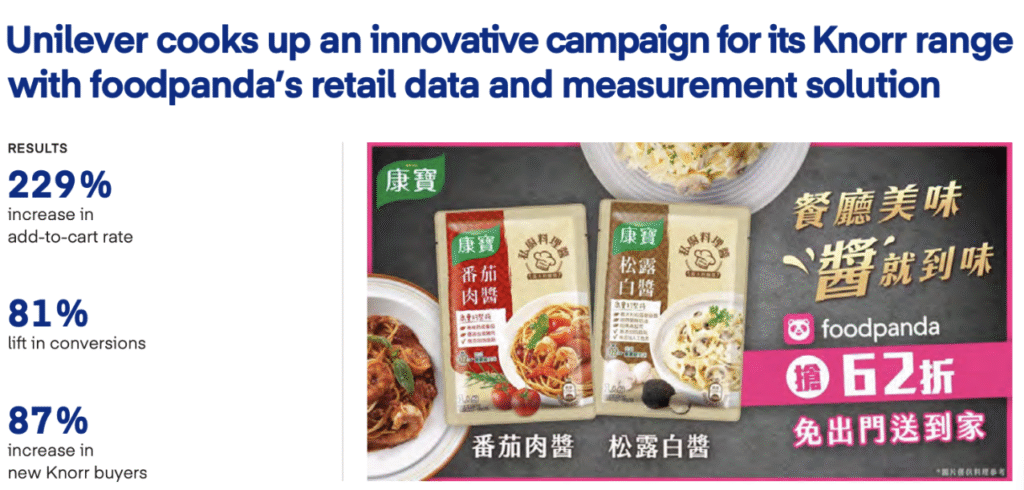
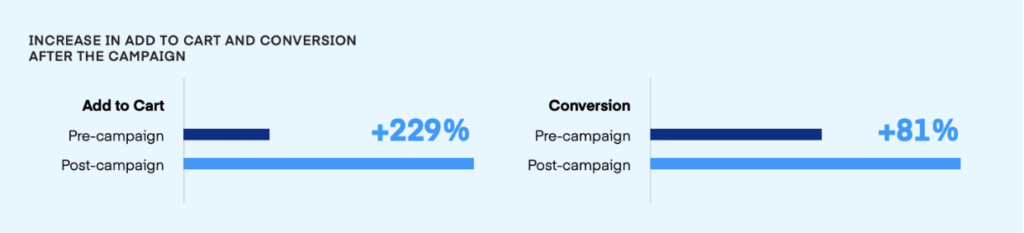
The Trade Desk and Foodpanda’s campaign for Knorr in Taiwan demonstrates the power of connected measurement. Shoppers engaged with ads an average of 9.5 times before purchasing. Understanding how attention accumulates across placements helped planners see how retail and open web channels work in sequence. The campaign achieved 229% increase in add-to-cart rate, 81% lift in conversions, and 87% of buyers were new to Knorr.
Tracking the complete journey showed which touchpoints built awareness, which drove consideration, and how these combined to acquire new customers at scale. Each exposure played a distinct role in moving shoppers toward purchase, making the case for continuity between upper and lower-funnel media.
“The real insight wasn’t just the final sale,” explains Vivek. “It was understanding the entire pathway that creates conversion.”
7 out of 10 marketers fund retail media through trade or shopper budgets, separating teams tracking gross merchandise value (GMV) from those managing brand metrics. However, shoppers move seamlessly between channels; they see brands on CTV or social platforms, compare on marketplaces, add items in quick commerce apps, then complete purchases in-store.

“E-commerce operations are too often optimised for transactions, not media impact,” notes Alin Popescu, Head of Commerce Strategy, APAC at WPP Media. “e-commerce managers’ KPIs centre on GMV contribution and sales attribution, while upper-funnel teams manage awareness separately. The opportunity is connecting these perspectives to bridge performance and brand and ultimately answer: are we generating the right quality of traffic?”
Connected measurement bridges what trade and media teams each see in their data. Instead of parallel reporting, teams have one conversation about how activities across channels contribute to outcomes. This unified view informs better investment decisions based on complete performance rather than fragmented metrics.
Four Ways To Tell The Full Story
Every brand’s measurement story needs different chapters. These four approaches from Southeast Asia and India show how to track the complete journey; seeing which upper-funnel investments drive sales, where audiences overlap, and how trade and media budgets work together.
1. Define Your Marketing Funnel
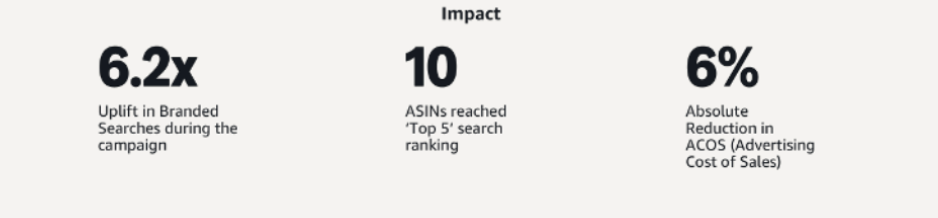
Measurement starts where your customer journey begins, not just where it ends. Direct-to-consumer (D2C) brands measuring only bottom funnel conversions miss the activity that influences those sales. With Amazon Marketing Cloud, Nasher Miles discovered what they were missing when they mapped their entire funnel. The luggage brand found display ads with poor last click ROI were building the awareness and consideration that made sponsored products more effective.

“Most D2C brands in early stages of their journey focus more dominantly towards the bottom section of the funnel to drive purchase,” explains Kapil Sharma, Director at Amazon Ads.
This broader view improved Nasher Miles’ advertising efficiency by 6% while reaching new audiences. They now see how travellers find them through display, research through content, then purchase through sponsored products, with each stage supporting the next.
PepsiCo Thailand’s Quaker campaign on Shopee proved full funnel measurement changes both creative and media decisions. Publicis Media monitored each stage from branded search through to add to cart, finding video placements built the awareness that lifted lower funnel conversion rates. This single measurement model increased total sales by 18% and improved ROAS by 25%. The campaign showed how upper funnel video formats strengthened bottom funnel performance.
Different brands emphasise different stages based on their growth priorities. Established brands with strong market share often focus on retention and loyalty metrics. Emerging brands building their customer base start with conversion then expand their view upward. Each brand needs different measurement based on objectives whether revenue growth, market share protection, or category expansion. The opportunity is ensuring measurement captures enough of the funnel to understand which activities contribute to these specific business objectives.
2. Set Stage-Specific KPIs
Each funnel stage benefits from distinct metrics aligned with specific objectives. Instead of applying ROAS universally, by mapping appropriate KPIs to each phase: awareness (reach, impression frequency, branded search lift), consideration (engagement rates, add-to-carts, page views), purchase (conversion rates, customer acquisition cost, advertising cost of sale/ACoS) or total advertising cost of sale/TACoS), and loyalty (lifetime value).
LEGO India applied this approach and tracked distinct metrics for each stage – achieving a 7x increase in branded searches for awareness, 30% improvement in consideration metrics, and 163% sales growth on Amazon.in. By measuring stage-specific performance rather than just final sales, LEGO could see exactly where their campaign excelled and where to optimise further.
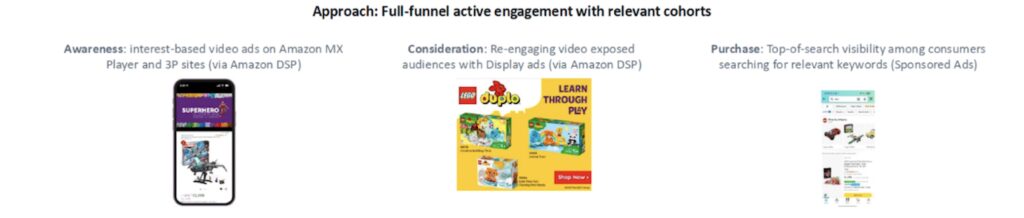
This approach also revealed the relationships between metrics. The massive increase in branded searches signalled growing awareness flowing through to consideration and purchase. Without stage-specific measurement, they would have seen the sales increase but may not have understood the mechanism driving it.
Zespri’s campaign with The Trade Desk and FairPrice Group further demonstrates the power of targeted KPIs. By tracking both online engagement and in-store purchase behaviour, they found customers who bought kiwis in the past three to six months delivered 30% better cost per acquisition than those who simply bought other fruits. Understanding consideration and purchase patterns at this level enabled more precise targeting and budget allocation.
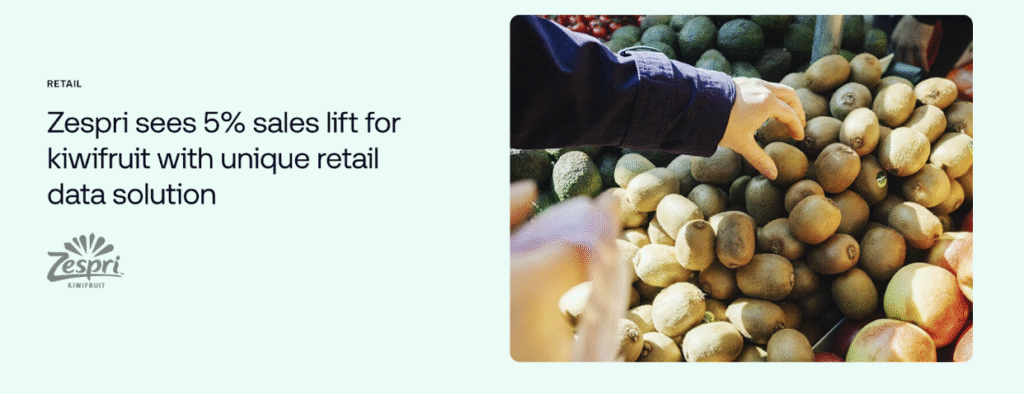
“This comprehensive approach reveals the full impact of brand metrics alongside sales performance,” notes Kapil. Stage-specific KPIs show not just what happened, but why it happened and where to focus next.

As Pallavi Singh, Account Director, DSP Partnerships & Marketplace at Magnite observed, understanding “incrementality or any kind of brand lift across channel impact instead of just ROAS” changes how marketers can evaluate performance. Measuring by funnel stage connects awareness, consideration, purchase and loyalty in one view, with each metric explaining a different part of how outcomes are achieved.
3. Integrate Third-Party Measurement Solutions
Platform metrics provide powerful insights becoming even stronger when combined with third-party validation. Independent verification helps marketers understand impact beyond platform boundaries, tracking footfall, assessing brand lift, and linking online activity to offline results.
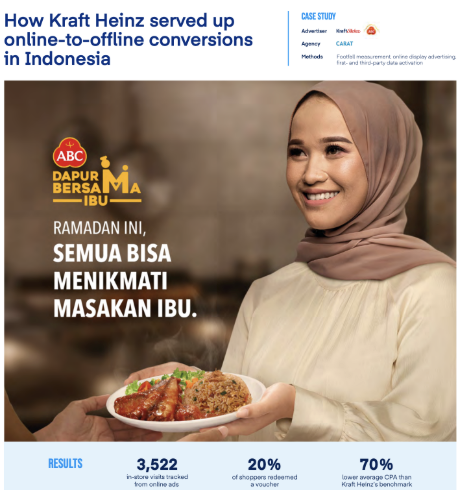
Kraft Heinz Indonesia’s campaign for ABC syrups shows what independent tracking uncovers. The team wanted to drive supermarket purchases through online advertising, offering voucher codes for in-store redemption. By combining The Trade Desk’s platform with footfall analytics, they could trace how digital impressions translated to physical store visits and actual sales. Real-time visibility enabled mid-flight optimisation, adjusting ad sizes and placements based on which formats drove the most store visits.
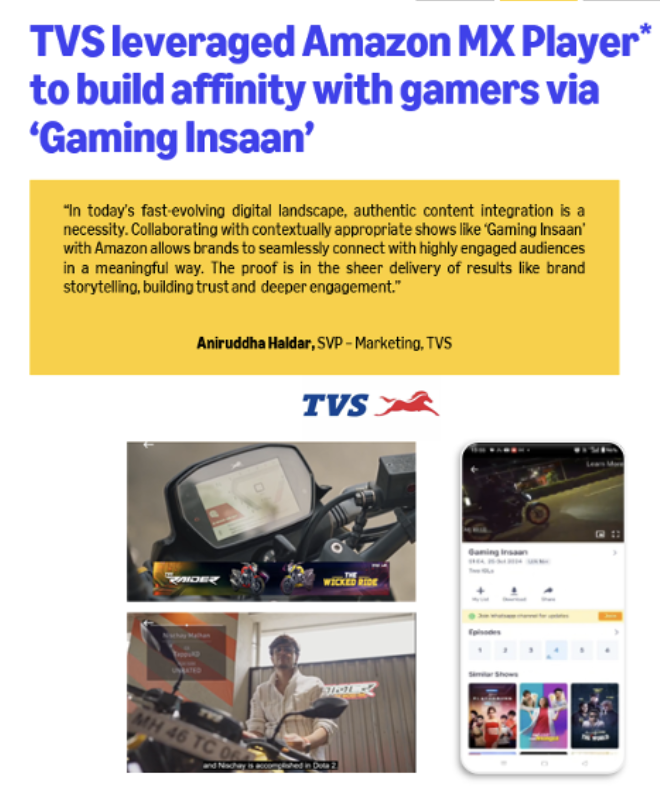
TVS Raider took a different approach, pairing Amazon’s first-party signals with Kantar’s Brand Lift Study to understand their gaming engagement strategy’s full impact. Dual tracking showed outcomes beyond direct sales: 37MM+ impressions generated 9% awareness lift, 8% consideration increase, and 14% purchase intent growth. Independent validation demonstrated their campaign built brand equity alongside driving transactions.

As Sarah McGann, Head of Strategic Accounts, Singapore and India at LinkedIn notes, “A lot of what’s being measured is campaign based and not brand based. For some clients, there’s still a gap in how that connects to broader brand performance or long-term goals. It’s not that they don’t have the data, it’s that we haven’t yet built the frameworks to read it consistently across retail and non-retail environments.”
Her observation emphasises why independent validation matters for long-term strategy. When retailers, agencies, and analytics partners align, performance data becomes a bridge linking campaign efficiency to the longer arc of brand growth.

Independent validation becomes especially important when campaigns span multiple platforms. As Uma Ranganathan, Head of Solutions Development at Dentsu observed during the discussion, “Platforms like Shopee and Lazada each have their own measurement approaches.” Third-party solutions provide the common language to compare and optimise across different retailers whilst ensuring budgets account for audience overlap and duplication.
Independent verification also enables tracking what platforms cannot assess alone, including offline impact, competitive context, and long-term brand health. For marketers investing across multiple retail media networks, third-party validation creates a shared measurement framework for comparing performance and allocating budgets.
4. Connect Across Platforms
Cross-platform data sharing enables brands to see how customers move between touchpoints, understand audience overlap, and measure complete journeys regardless of where transactions occur.

Quick commerce in India provides the template for this connection. Criteo’s partnership with Swiggy enables brands to map off-site engagements feeding into conversion. “You extrapolate with datasets within the open internet through a platform like Criteo, which makes it millions of such people,” Sukesh Singh, Managing Director (SEA) at Criteo explains. “The reach was 50% higher for the campaign, while also delivering ROAS.”
The Swiggy-Criteo partnership’s results for Kellogg’s demonstrate the value with 1.9x ROAS, 25% new-to-brand rate, and 50%+ reach expansion. By connecting quick commerce data with open internet insights, brands achieve both scale and efficiency.
When platforms share data, brands can track how exposure in one environment influences behaviour in another. Instead of optimising each platform independently, marketers can allocate budgets based on understanding which platform combinations drive the strongest results and where audiences engage across multiple touchpoints.
As Alin observes, “The challenge now is knowing how to allocate investment across upper-funnel, off-site redirection, and on-platform activity. Connected measurement gives marketers the visibility to decide where the next dollar should go.”
Cross-platform collaboration moves measurement beyond platform-level reporting into a shared system connecting audience understanding, creative context and commercial results.
The Next Chapter
Retail media measurement in Southeast Asia and India continues advancing. LEGO’s 7x branded search increase flowed through to 163% sales growth because they tracked each funnel stage. Kraft Heinz traced digital impressions to store visits using footfall analytics. Kellogg’s achieved 1.9x ROAS and 50%+ reach expansion when Criteo connected Swiggy’s quick commerce data with open internet insights.
“Education is a big part of it,” observes Sukesh. “We sometimes try to fit familiar approaches into new opportunities. But we’re seeing brands go beyond just ROAS.”
Each marketer’s story will differ based on their objectives and capabilities, but what remains consistent is the opportunity. As platforms add capabilities and partnerships develop across Southeast Asia and India, the potential for comprehensive measurement grows alongside the channel itself.
want to read more insights from the iab sea+india retail media council?
The IAB SEA+India Retail Media Council brings together expert insights and real use cases of Retail Media across the region, helping the industry navigate opportunities in Southeast Asia and India.