
The IAB SEA+India AI Council brings together technology leaders from across the digital marketing ecosystem to address the region’s most critical AI implementation challenges and opportunities. Council Members lead presentations and discussions on priority topics, with the IAB SEA+India team developing these into features to share the Council’s insights and guidance with the wider industry.
Presenters: Andrew Ridsdale-Smith, Kantar; Lee Smith, Omnicom Media Group; Marc Holloway, Smartly; Nhi Tran, WPP Media Vietnam
Discussion Participants: Divya Acharya, WPP Media; Emir Caglayan, WPP Media; Ibrahim Merican, Magnite; Joseph Lee, PubMatic; Matthew Drury, Meta; Miranda Dimopoulos, IAB SEA+India; Priya Bhatia, OpenX; Rohiet Ghildyaal, Eyeota, a Dun & Bradstreet Company; Shrivardhan Sarda, Ogury; Shubham Dubey, The Coca-Cola Company; Vivek Saxena, InMobi
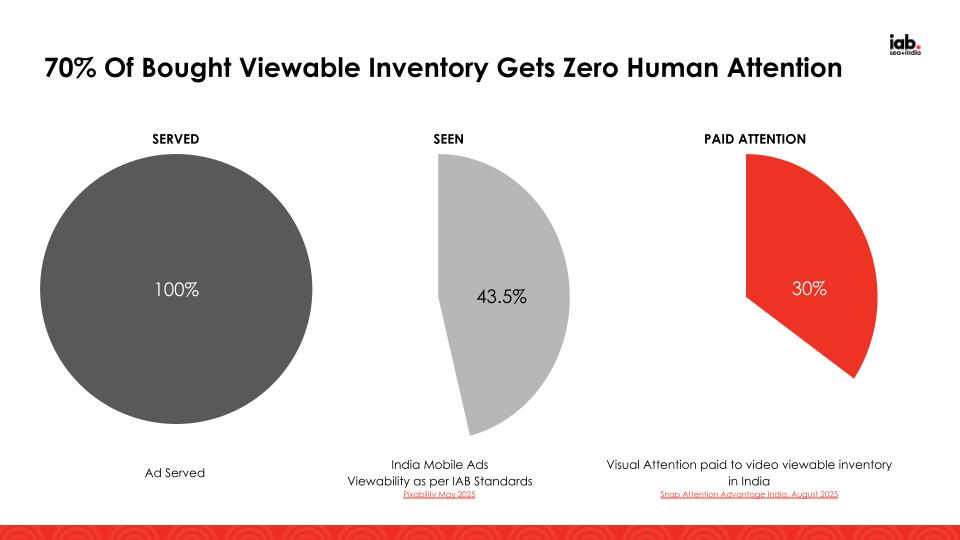
TL;DR: AI tools are now helping teams generate campaigns faster than audiences can absorb them, only 30% of viewable inventory captures attention. With creative volume no longer a challenge, the question becomes how AI gets applied for better campaign results. Three personas help marketers across Southeast Asia and India see what’s possible: Optimisers do things better through automation, Accelerators do better things through smarter decisions, and Pioneers create new things entirely.
When Creative Abundance Creates Attention Scarcity
Advertising effectiveness across Southeast Asia and India now confronts an attention paradox. AI generates campaigns faster and cheaper than ever while only 30% of viewable advertising inventory captures visual attention. Creative production has never been easier when human focus has never been scarcer.
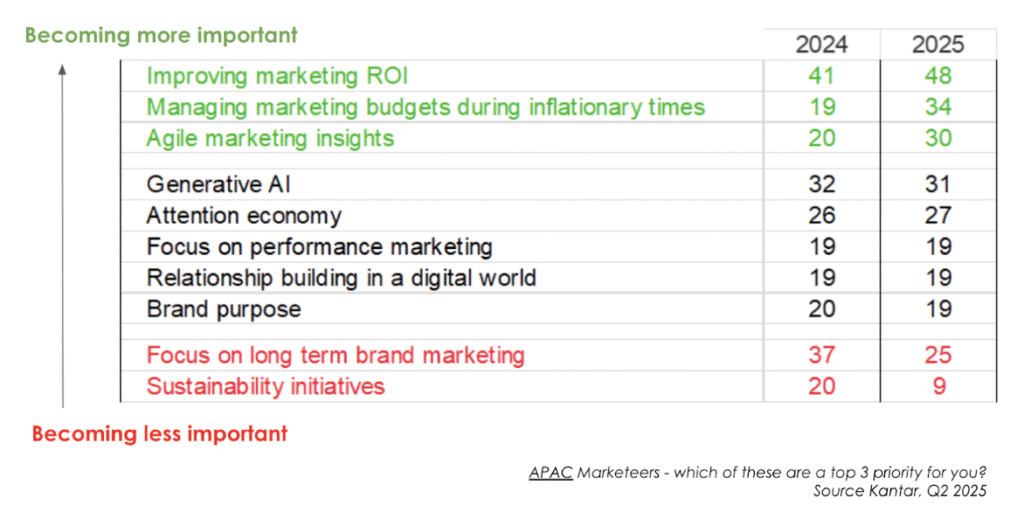
Economic pressure deepens this paradox. APAC marketers now prioritise improving ROI above all else whilst deprioritising long-term brand marketing. L’Oréal represents this reality, directing about 80% of advertising spend toward performance marketing.

Yet as Andrew Ridsdale-Smith, Head, APAC Analytics Practice at Kantar observes, “I feel we’re optimising and trying to drive efficiency that delivers short-term results without really thinking about the long-term effect on the brand.” The pursuit of immediate returns may undermine the brand strength which generates those returns.
As Marc adds, “It’s getting harder to cut through.”. Marketers across Southeast Asia and India face a strategic challenge; implementing AI’s capabilities which match company capabilities while determining which campaigns deliver business outcomes.
AI Creative’s Performance Split
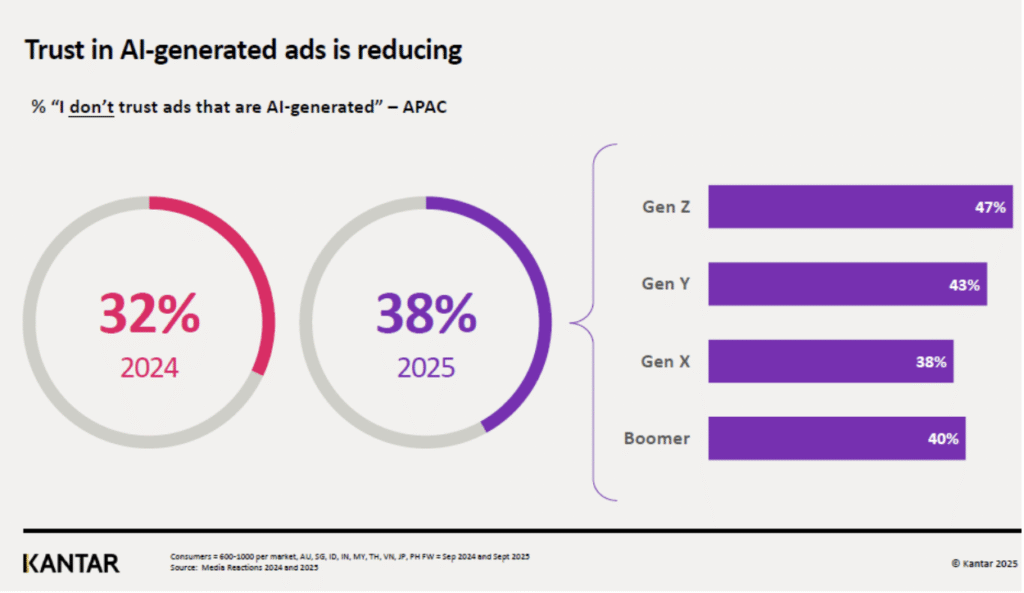
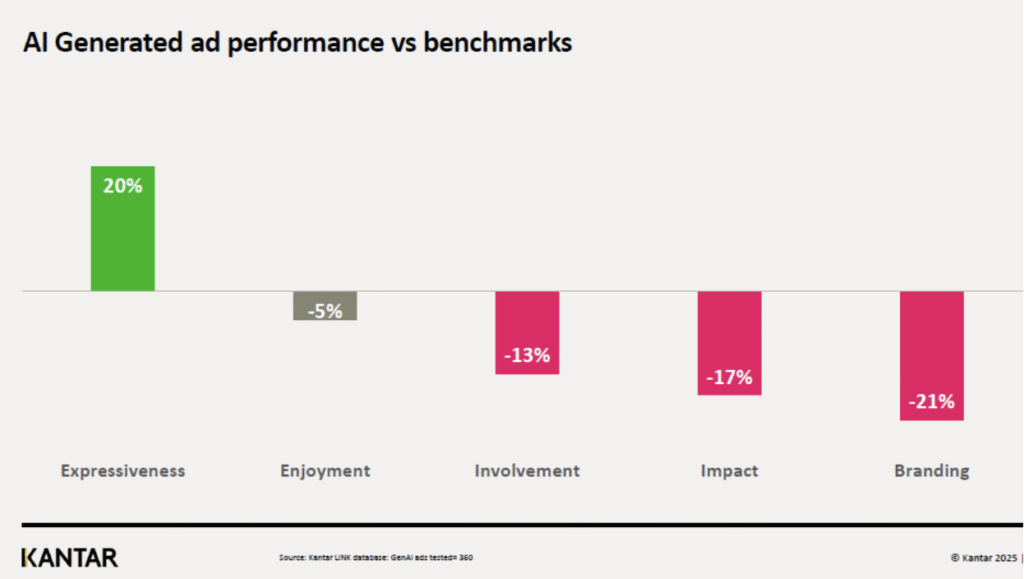
Current optimisation toward AI creative efficiency creates a performance paradox. Trust in AI-generated advertising is declining across APAC, with younger audiences showing the sharpest skepticism. “Younger kids even, they’re becoming more and more susceptible, more suspicious of Gen AI ads,” Andrew notes. The irony is AI-generated ads perform 20% above benchmark for expressiveness, which measures shareability and viral potential.
This disconnect also appears in branding metrics; AI creative scores just over 20% below benchmark for branding, with impact and memorability also underperforming. “The main difference is they do relatively poorly in terms of branding, which is about do I feel an affinity and emotional connection to the product, and they do relatively poorly in what’s called impact, which is memorability in many ways,” Andrew explains. Ads performing well on immediate engagement metrics may erode brand strength measured across longer timeframes.
Creative direction does influence consumer response, when AI-generated creative embraces stylised or obviously artificial aesthetics, viewer reception improves markedly.

The Coca-Cola Company’s Thums Up campaign in India demonstrates this approach. “Our India team needed to come up with some concept of the local superhero where they can quickly turn around, come up with the creative and can distribute it,” shares Shubham Dubey, Senior Manager, Marketing Technologies at The Coca-Cola Company.
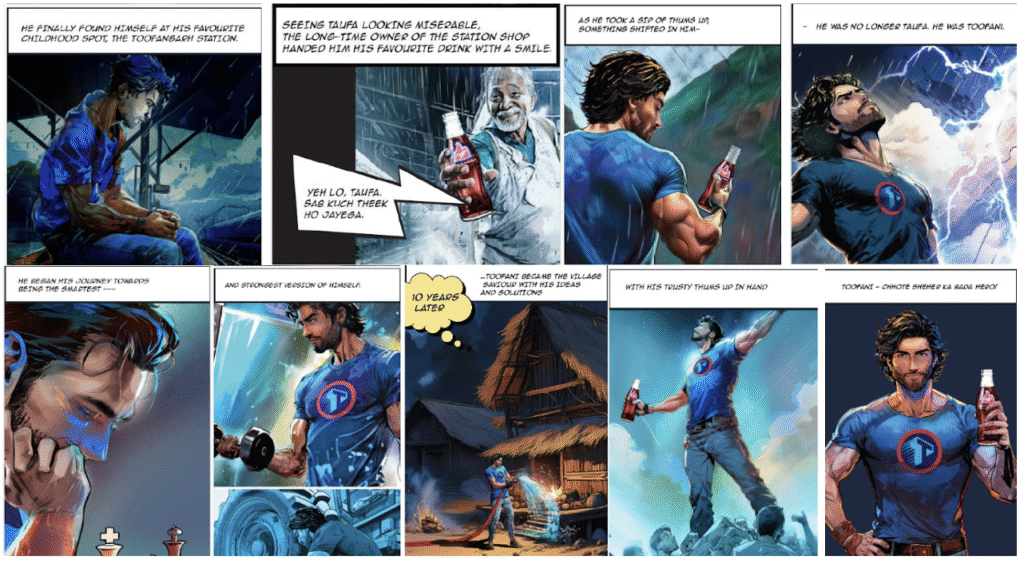
The campaign created comic-style characters and complete scenes shared through WhatsApp channels. “The moment it landed onto the WhatsApp channels, the distribution was great, the engagement was great.” Shubham adds. By leaning into artificial aesthetics rather than attempting realism, The Coca-Cola Company captured both AI’s speed advantage and audience engagement.
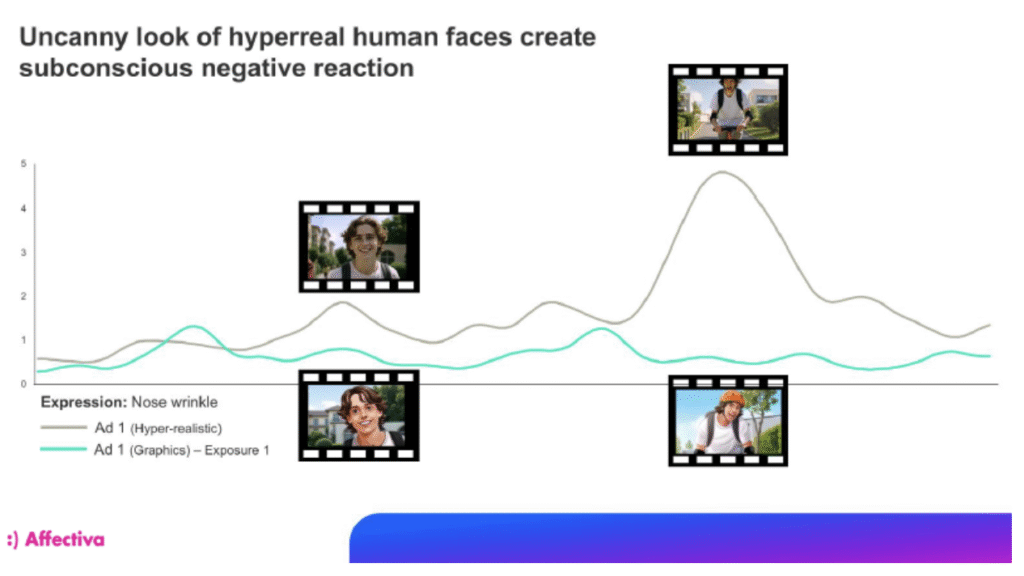
The opposite happens when hyper-realistic AI faces appear, viewers exhibit measurable discomfort. “The messaging is at the moment Gen AI ads that are trying to be too human and realistic are generating negative responses from people,” Andrew emphasises. Companies like Nestlé now mandate real humans in advertisements and optimise AI generation for other elements.
Creative production represents one application of AI capabilities. Marketers across Southeast Asia and India deploy AI across campaign management, audience targeting, budget allocation, and performance measurement. Each application requires different technical infrastructure, data readiness, and team expertise. Companies adopt these at three distinct stages: using AI to do things better, do better things, or create entirely new possibilities.
Three AI Implementation Personas To Help Do Things Better, Do Better Things and Create New Things Entirely
Across Southeast Asia and India, marketers adopt AI at three stages reflecting their operations and business focus.

“As we went through a lot of the cases and looked at the different methods and tools and tech that is being used in measurement with AI, we started to think about putting the activity or the stage at which brands or agencies are at into personas,” outlines Lee Smith, Managing Director, TRKKN at Omnicom Media Group. “We landed on a place that we’re reasonably comfortable with that probably represents just over 90% of the activity that we’re seeing in the market.”
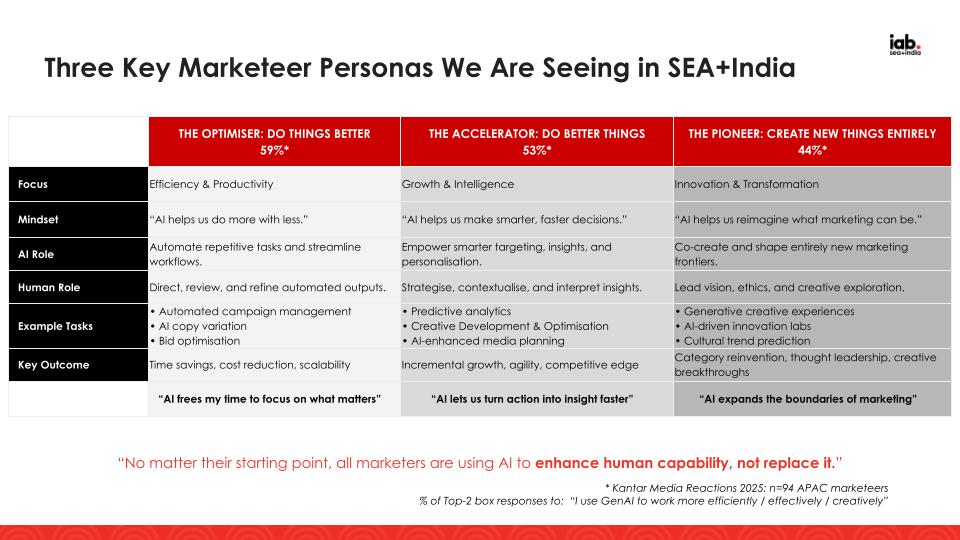
This analysis across dozens of brands identified persona patterns and how each balances human oversight with AI differently: The Optimiser, The Accelerator, The Pioneer.
The Optimiser: Do Things Better
The Optimiser level focuses on doing current activities better through AI automation. The mindset centres on “AI helps us do more with less.” AI automates repetitive tasks and humans direct, review and refine outputs. This includes automated campaign management and AI copy variation.

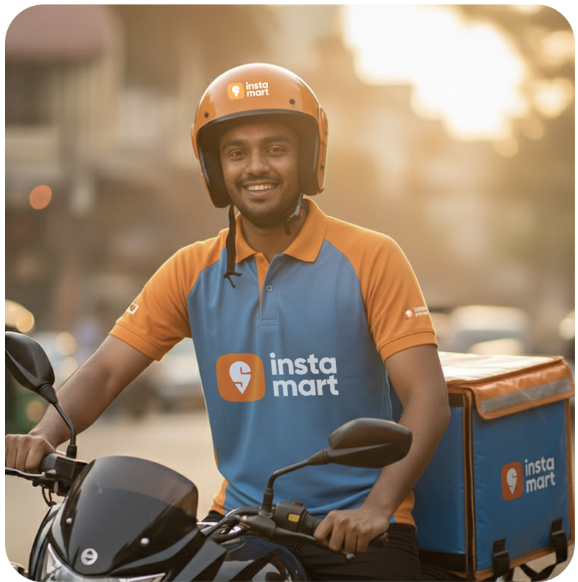
Swiggy’s Instamart partnership with Smartly is a great example of the Optimiser persona. “Instamart integrates their external data sources into Smartly, which gives them a real time view of their key metrics that they’re measuring,” Marc Holloway, Head of Customer Success APAC, Smartly shares. “That data is used to power Smartly’s predictive budget allocation model to move budgets automatically based on where Smartly’s model predicts which channel, campaign, adset or ad will deliver against their key metrics.”
Without increasing budgets, predictive budget allocation drove 7,500 incremental conversions over the campaign period and Instamart’s customer acquisition cost dropped 15%. “The monthly ad spend saved just by implementing this live measurement and predictive budget allocation was 56 lakh per month (SGD$108k)” Marc adds, “A fantastic example of using measurement and predictive models to deliver stronger outcomes without increasing budgets.”
A paints manufacturer in Indonesia presented a common challenge. “Their problem was they were facing a slowdown in sales, and their media budgets were growing at the same time,” demonstrates Andrew. Using Kantar’s AI-powered media mix modelling (MMM) showed how media was driving sales and identified an optimised approach which recommended reallocating budgets from paid media channels like PR, events and TV toward below-the-line activities and in-store investment.
The reallocation generated around $8 million in incremental sales from the $11 million media budget. “It’s not just about predictive development, it’s about optimising the output,” Andrew notes.
The Accelerator: Do Better Things
The Accelerator level moves beyond efficiency to strategic growth. The focus shifts to “AI helps us make smarter, faster decisions.” AI empowers targeting insights and personalisation so teams can focus on how to strategise, contextualise and interpret findings.
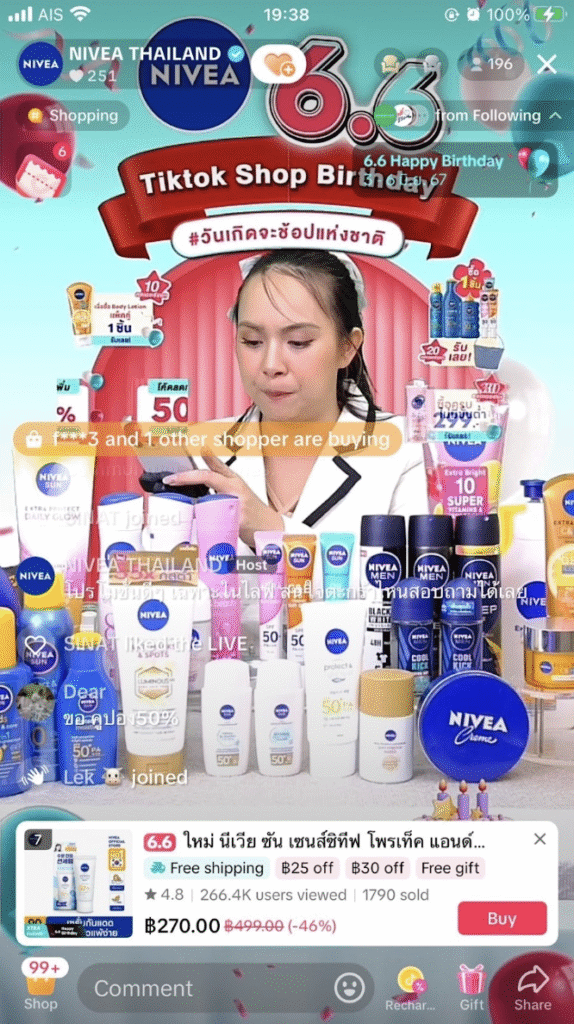
Nivea’s creator content strategy across Thailand and Indonesia illustrates the Accelerator persona. Managing hundreds of creators across TikTok, Instagram and YouTube generated overwhelming reporting requirements which was consuming team capacity. Nivea implemented AI to analyse creator performance in real-time, pulling analytics directly into TikTok’s GMV Max for optimised sales conversion.
“This was something that for them was saving hundreds of hours of time looking at individual channels and helping them really put all that analysis in the background and start focusing on cross-channel optimisation,” Lee shares. The team could focus on creator selection strategy whilst AI handled performance analysis. Double-digit ROI lift emerged alongside ROAS increased 10 times. Content decisions accelerated massively in what can be described as a huge sea of creator decisions.

WPP Media’s CPG client in Vietnam demonstrates the Accelerator persona in audience intelligence by connecting DV360 exposure data, Google Analytics audience engagement, and YouTube results into Ad Data Hub. “We want to go beyond the standard targeting signals on DV360,” shares Nhi Tran, Nexus Media Solutions, Lead at WPP Media Vietnam. “We’re connecting all of the data together to find out which is the potential audience cluster who’s going to give the high performance of reach and high performance of view,”
The campaign increased reach saturation by 10 percentage points on the same budget whilst reducing cost per incremental reach by 15%. “It’s like a circle of humans connecting the data together, the machine learning, and then the AI to do the predicting on the performance,” Nhi describes. “I think it’s just giving us the proof of concept that’s connecting humans, automation and AI together. Then we can escalate it on a bigger scale.”
The Pioneer: Create New Things Entirely
The Pioneer persona creates new marketing capabilities with continuous discovery and refinements because “AI helps us reimagine what marketing can be.”.
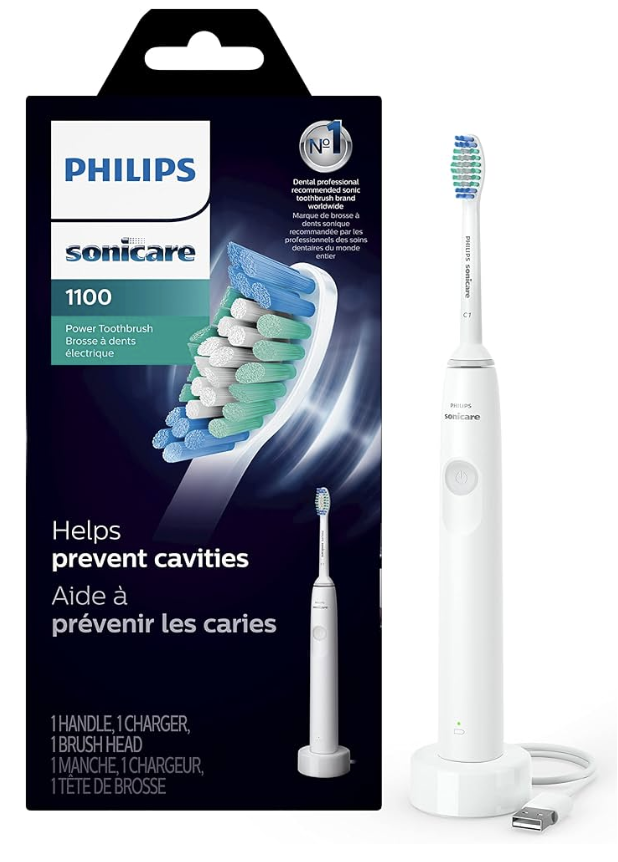
Omnicom Media Group’s and their client Philips’ Sonicare campaign in Singapore showcases Pioneer thinking. The challenge involved connecting live shopping engagement with purchase intent for premium electric toothbrushes exceeding SGD$500. Working with Meta, Omnicom Media Group combined live partnership ads with an influencer discovery agent creating a self-optimising system.
“This amazing sort of triangulated, self-satisfying world of continuously driving new influencers that are doing the best work,” describes Lee. AI identified live shopping successes, found new influencers matching lookalike criteria, and brought them into the creator lineup, delivering 20x ROI improvement in the first couple of weeks. “A new blueprint for how they run their dynamic live planning,” Lee adds.
What Still Counts When Ads Are Infinite
AI now generates campaigns faster than audiences can process them; the creative volume keeps accelerating but audience attention doesn’t. At the same time, economic pressure intensifies and APAC marketers now prioritise improving ROI above all else, whilst focus on long-term brand building has dropped significantly. As production becomes easier, understanding what really delivers business outcomes becomes harder.
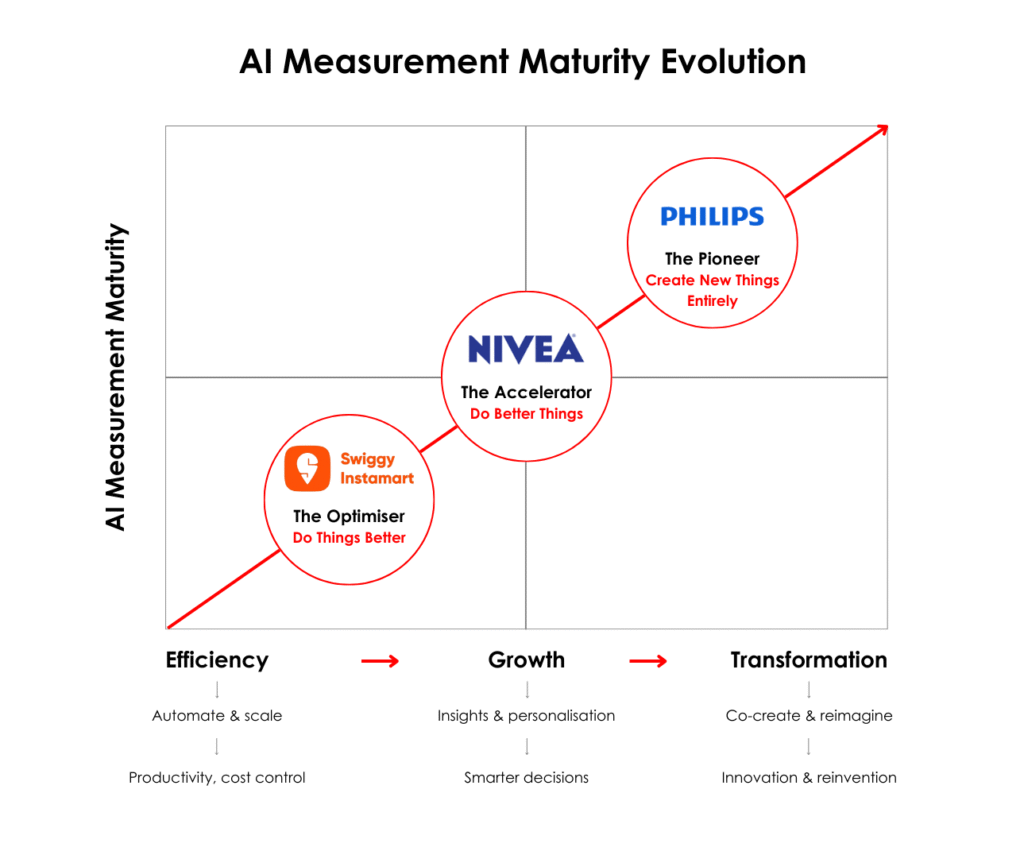
Using our three personas, marketers across Southeast Asia and India can measure effectiveness in different ways; Optimisers automate current activities for efficiency gains, Accelerators use AI for smarter, faster strategic decisions and Pioneers create entirely new systems with continuous transformation. The defining capability isn’t about adopting the most advanced AI, it’s excelling at the stage which best matches current company capabilities.
“Don’t be afraid to maximise your potential and capability in your persona that you’re in now before you move to the next one,” advises Lee. “Because the worst disaster is that you start dabbling a little bit in each of them and you don’t ever really progress to the next phase.” Excellence at current capability levels whilst building foundations for progression will deliver better outcomes than attempting advanced implementations on inadequate infrastructure. “Data readiness is really more critical than ever. And I think it’s really important for brands to understand which persona they fall into. But they have to be really honest with themselves.”
This honesty is also important as marketing continues to diverge. “I feel like there’s a split now in the future of marketing,” Andrew predicts. “I’m going to automate absolutely everything with AI for my performance stuff. But brand building is going to start using different channels, different ways of communicating.” High-volume AI creative will be measured on immediate conversion and premium human production will be measured on emotional resonance.
“100 years of fundamentals still count,” Lee reminds. Across Southeast Asia and India’s marketers will navigate this divergence through different approaches; some will do things better, others will do better things, and some will create new things entirely.
want to read more insights from the iab sea+india ai council?
The IAB SEA+India AI Council brings together expert insights and real use cases of AI across the region, helping the industry navigate opportunities in Southeast Asia and India.