
WARC’s Rica Facundo explores the “democratising” effect of creators and AI in Asia’s social commerce ecosystem and the role of brand building in feeding the machine.
The “Inside” series is a collaboration between WARC and IAB SEA+India to spotlight the power of collective expertise in navigating the region’s diverse landscape based on exclusive access to IAB members.
Social commerce has transformed from a novel concept into a critical revenue channel for brands across Southeast Asia and India. The consumer journey is rapidly shifting from a traditional “search to shop” model to an intuitive “scroll to buy” paradigm, where discovery and purchase often occur within a single social commerce platform.

Central to this transformation is the “democratisation effect” that both creators and AI exert on the content ecosystem, reshaping the methods of brand discovery and advertising production.
Just as D2C democratised distribution, social commerce—especially video commerce—is now democratising discovery, with two in five users relying on online video for research in Southeast Asia, explains Google’s Neel Murty.
“The precursor to social commerce is DTC. Previously there was a direct-to-consumer effort to build and use websites to drive sales.” Now brands are simply “following where they find customers the most” – on video and social platforms.
While DTC democratised distribution by removing traditional retail gatekeepers, social commerce has democratised visibility itself by creating a more level playing field where brand discovery is increasingly driven by content quality and algorithm relevance rather than marketing budgets alone.
In fact, the TikTok 2024 Shoppertainment playbook found that 81% of consumers expect the full experience from discovery to purchase to happen in-platform.

As platforms blur the lines between content consumption and purchasing, at an IAB event, members discussed the new challenges marketers face in balancing brand building with performance metrics while leveraging creators and AI technologies.
Selling value, not discounts
One of the fundamental paradigm shifts in this new content ecosystem is that creators are the new gatekeepers of consumer attention and trust, thereby transforming how brands connect with consumers and drive sales.
But while creators have become essential partners in the social commerce ecosystem, brands are hindering their marketing effectiveness by approaching these relationships with a primarily discount-driven and transactional mindset.
“When I go on TikTok or watch a live stream on Shopee, sometimes the creator is just saying ‘buy this item because it’s cheap.’ But is that really sustainable for brand growth in the long term?” questions Publicis’ Jeraldine Toh “At some point we will reach a saturation point where everyone is just competing on price.”
Rather than simply promoting price points, effective creator partnerships showcase how products meaningfully integrate into consumers’ daily lives.
This approach shifts the conversation from “buy this because it’s cheap” to “here’s how this enhances your life,” helping brands communicate their unique selling propositions and build long-term trust.
The most effective creator partnerships balance several key elements:
- Authentic storytelling that goes beyond price promotions.
- Brand alignment where creators genuinely connect with the product and brand.
- Consistent messaging across different touchpoints.
- Long-term relationships rather than campaign-by-campaign engagements.
This strategy proves particularly valuable as brands face increasing competition from price-aggressive competitors, enabling established brands to maintain their edge by emphasising quality, innovation, and lifestyle enhancement rather than engaging in unsustainable discount wars that ultimately erode brand equity.
Connect brand and commerce teams
A recurring theme among IAB members is the challenge of organisational silos that prevent brands from fully integrating creator partnerships and social commerce into wider marketing strategies, thereby ultimately hurting the brand.
While brands consistently engage creators for sales-driven campaigns, there’s a lack of cohesion across touchpoints that can ultimately confuse consumers and hurt the bottom line, points out Publicis’ Toh.“For example, a consumer can find a 15% discount via a creator, but then discovers later on that Shopee, Lazada or on a brand.com site there’s a bigger discount.”

EssenceMediacom’s Nikhil Motwani’s reveals that a lot of brands tend to do creator content in isolation. “The creator team is completely different from the team that does the brand.com selling or other channels of awareness or conversion.”
Savvy brands are addressing this by bringing together previously separate teams and aligning around the customer intent:
- Focus on user intent: Aligns teams around clear objectives and user intent: “Rather than just driving pure commerce action, marketers should instead be asking what the intent is the brand is trying to do with that particular creator, and do they speak for the brand?” says Toh.
- Annual Creator Planning: “Plan for creators like you plan for media or creative on an annual basis, versus just campaign to campaign” asserts Motwani. “Then you can get a select set of people to work with you for an entire year for all of your campaigns, and that sort of organically makes them your brand spokesperson.”
- Cross-Team Collaboration: Marketers should break down silos between brand teams, e-commerce teams, and media teams to ensure consistent messaging and offers across touchpoints.
- Content Integration: Repurpose creator content across your brand’s owned channels instead of treating it as isolated campaigns. For example, “use the creators’ content like a partnership ad or a Spark Post” recommends Motwani.
Feeding the machine with quality and quantity
The convergence of content and commerce has created new demands for content strategy and production, focusing on both quality and quantity to feed the social commerce machine.
This dual requirement presents a challenge: maintaining high creative standards while simultaneously producing enough content to feed algorithms so that the right piece of content finds the right user.

The volume dimension becomes particularly critical in live commerce-driven environments. TikTok’s Chew Wee Ng from TikTok notes, “for brands to drive a critical mass of GMV, we encourage them to do minimum three hours of live shopping to be able to build up the traffic and find the right viewers or people to start shopping.”
As brands navigate this new content ecosystem, artificial intelligence emerges as a powerful enabler for scaling authentic engagement across social commerce.
While AI can dramatically increase content production capacity, Ng recommends the following approaches:
- A balanced content mix: “The best results is not brand-led content. It is not creator-led content. It is a mix of both.” This hybrid approach allows brands to maintain their distinctive voice while benefiting from the authenticity and relatability that creators bring to the table.
- Consider brand avatars: Use AI to translate content into multiple languages automatically. “How do we do three or more hours of live streaming a day? You can train your avatar… to live stream for longer hours and also do it in many languages if you need to localise.” This capability is particularly valuable in linguistically diverse markets like Southeast Asia, where brands “will now have to take that regional approach within the country” to connect with consumers in their preferred languages.
In this new social commerce environment, brands must become skilled orchestrators of a diverse content ecosystem rather than centralised message controllers. This requires developing brand frameworks and ways of working that feed the machine in a way that doesn’t compromise brand equity and the bottom line.
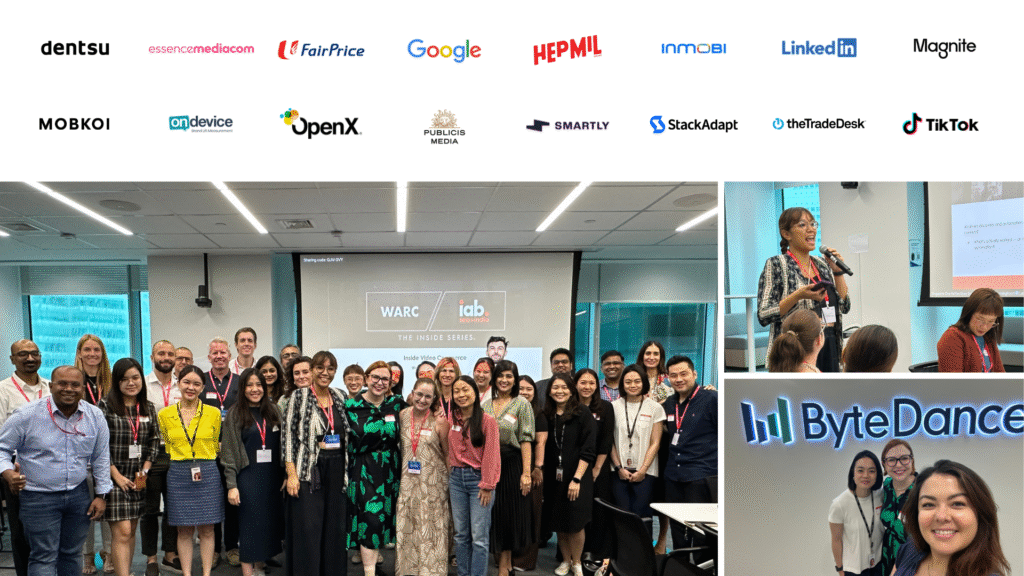
A big thank you to all of our members who took the morning to attend, contribute, and helped with the development of the article. A special thank you to TikTok for hosting us!