
The IAB SEA+India Retail Media Council brings together commerce specialists from across the digital marketing ecosystem to address the region’s most critical retail media challenges and opportunities. Council Members lead presentations and discussions on priority topics, with the IAB SEA+India team developing these into features to share the Council’s insights and guidance with the wider industry.
Presenters: Mark Turner, Vice President, Affiliate & Partnerships, WPP Media APMEA; Pallavi Singh, Account Director, DSP Partnerships & Marketplace, Magnite; Uma Ranganathan, Head of Solutions Development, Dentsu
Discussion Participants: Alin Popescu, Head of Commerce Strategy, APAC, WPP Media; Bryan Choong, Director of Digital and Omnichannel Media, FairPrice Group; Kapil Sharma, Director, Amazon Ads; Mehul Mandalia, Co-founder and VP, MediaTech Solutions, Moving Walls; Miranda Dimopoulos, IAB SEA+India; Sarah McGann, Head of Strategic Accounts, Singapore and India, LinkedIn; Sumit Kumar, Director, Global Growth Programs, Tyroo; Vivek Misra, Senior Director, Data Partnerships, The Trade Desk

TL;DR: Retail media networks across Southeast Asia and India now operate across four distinct types, each delivering different data capabilities that marketers can match to campaign objectives. E-commerce marketplaces provide commerce data tracking online behaviors. Omnichannel retailers add in-store purchase signals. Superapps deliver deterministic behavioral data from mobility, payments, and food delivery. Specialist verticals in travel, property, and automotive offer high-value audience signals for consideration stage targeting.
Multiple Growth Paths Exist Simultaneously
Retail media networks (RMNs) across Southeast Asia and India operate through four distinct network types, each offering different data capabilities brands can match to specific campaign objectives

This region’s development follows a different trajectory than Western markets. Uma Ranganathan, Head of Solutions Development at Dentsu, identifies the distinction. “In the West, Ecommerce platforms progressed towards their retail media monetisation opportunity a few years into their existence, slowly leveraging the data richness, creating the space and technology for ads. In contrast, players in our region have launched their RMNs much earlier in their life stages, getting their data structures and ads asset readiness in place right from the onset.”
This means multiple growth paths exist simultaneously. Quick commerce platforms in India launched with first-party data capabilities embedded into operations. Social commerce platforms built creator ecosystems and transactional capabilities together, enabling new beauty brands to build category leadership within three years. Automotive brands found marketplace distribution for vehicle launches. Financial services connected to daily consumer transactions through co-branded payment solutions integrated with marketplace ecosystems. The opportunity for marketers lies in understanding which networks deliver which capabilities and how to combine them effectively across awareness, conversion, and attribution objectives.
Four RMN Types Deliver Different Capabilities
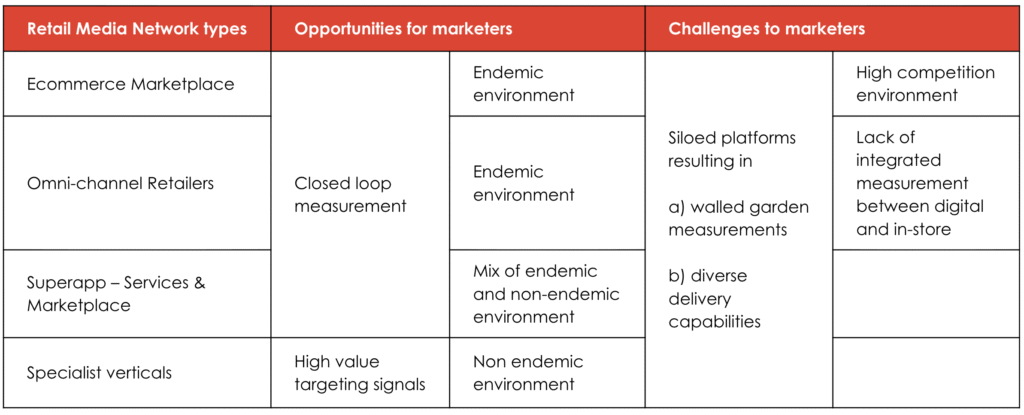
E-commerce marketplace RMNs like Amazon provide trillions of browsing, streaming and shopping signals that powers ads. These platforms deliver closed-loop measurement connecting ad exposure directly to transactions within their ecosystems. Marketers can optimise campaigns in real time based on actual purchase behaviour and transaction data.
Omnichannel retailer RMNs including FairPrice Group add in-store purchase signals to digital advertising. These networks connect digital ad exposure to offline sales outcomes, showing which campaigns drive foot traffic and in-store conversions. Marketers can track digital campaigns to in-store sales and optimise spend based on actual offline outcomes.
Superapp RMNs like Grab deliver deterministic behavioural data spanning mobility, payments, and food delivery. A consumer’s journey might include booking a ride, ordering dinner, and paying for both through a single platform, creating behavioural signals extending beyond commerce into daily life patterns. Marketers can reach consumers in contextually relevant moments throughout their day, serving restaurant ads during evening commutes or retail promotions when they’re near shopping districts, connecting to audiences beyond traditional purchase environments.
Specialist vertical RMNs in travel, property, and automotive offer high-value audience signals for consideration stage targeting. These platforms capture consumers during research phases for high-consideration purchases, providing intent data indicating purchase readiness. Marketers can reach consumers at the exact moment they’re comparing options and making decisions, when messaging has maximum influence on final purchase choices.
Three Ways to Create Custom Strategies
These four network types operating across Southeast Asia and India create options for how marketers structure their RMN approach. Marketers use each RMN type for different objectives including awareness, conversion, or full-funnel attribution. The following three examples show how different marketers are choosing which networks to prioritise and how to sequence their investments, based on their market position and objectives.
1. E-Commerce Marketplace Entry then Omnichannel Expansion
New brands entering crowded categories can use e-commerce marketplace RMNs with social commerce capabilities to build initial scale before adding omnichannel retailer RMNs to their distribution. This sequencing approach provides immediate market access without the capital requirements traditional retail distribution imposes.
Skintific exemplifies this model. The Indonesian direct-to-consumer (D2C) skincare brand launched in 2021 and reached top-five category status within two years on TikTok Shop, a timeline nearly impossible through traditional retail distribution requiring shelf space negotiations, minimum order quantities, and established brand recognition. Skintific worked with 200,000 creators who generated 50 million video views, using creator partnerships to build awareness and sales simultaneously.
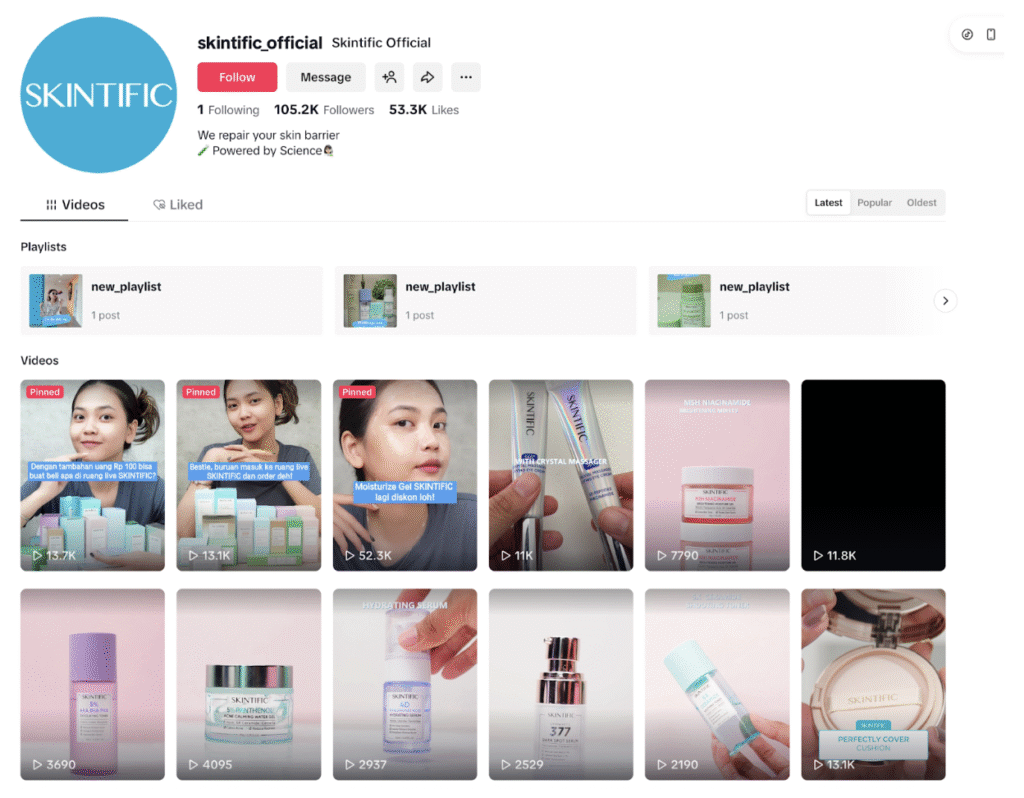
After validating market demand through social commerce, Skintific expanded to e-commerce marketplace RMNs Shopee and Tokopedia, then added omnichannel retailer RMNs including Sociolla, Watson’s, and Guardian. Glad2Glow followed the same sequencing and by 2025 has captured 5.1% of TikTok Shop’s beauty market and reached top-three skincare positions on Shopee and Tokopedia.
This sequencing lets new brands validate demand and build customer base before investing in traditional retail infrastructure. Both brands now operate across all three RMN types, but started by building scale in a single ecosystem before expanding.

Mark Turner, Vice President, Affiliate and Partnership Marketing, APAC at WPP Media, quantifies the investment required. “A full TikTok shop strategy is more expensive than people typically estimate. Not only is it a branding solution; you have a shop from which you pay for logistics, operations, warehousing, TikTok shop affiliates and media boosting. It can cost around 30 to 50% of product sales without having the ownership of that data.”
Beauty succeeds in social commerce because of lower decision-making friction and pricing below established brands. Uma explains the format advantage. “The product category lends itself very well to the format because it is show and tell.”
These D2C brands are gaining consumer preference and are disrupting some of the established multinational brands who are now trying to adapt their business models in this space.

Alin Popescu, Head of Commerce Strategy, APAC at WPP Media, explains “Many established brands have historically excelled by mastering a balanced mix of channels and playbooks. Today, the challengers are mastering one channel at its full potential: scaling volume and variety of content and creators at speed, behind products that deliver on their promise at affordable prices. If you think TikTok in Indonesia gives you probably 60-plus penetration within the market, you can max out your impact there.”
2. Ecosystem Partnerships for Non-Endemic Brands
Finance and automotive brands face a consumer behaviour challenge. Their target audiences spend significant time browsing and transacting on e-commerce marketplace and superapp RMNs, but these brands have no products to sell there. The solution involves partnerships embedding non-endemic brands into these ecosystems through co-branded offerings and integrated services, maintaining brand presence where consumers already spend time without requiring physical product distribution.
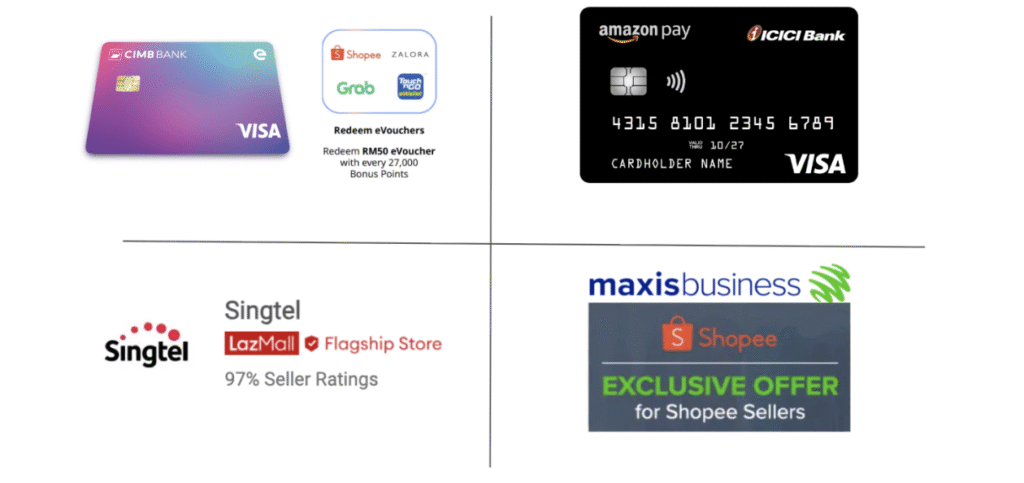
CIMB Bank’s e-card in Malaysia collects rewards redeemable with Shopee, Zalora, and Grab, connecting financial services to the marketplaces and superapps where consumers actually transact. ICICI Bank’s Amazon Pay card in India rewards spending both on and off Amazon with enhanced points for marketplace purchases. These partnerships place financial services brands into daily shopping journeys on e-commerce marketplace RMNs where purchase intent already exists.

Kapil Sharma, Director at Amazon Ads, sees category definitions evolving based on ecosystem integration. “The definition of non-endemic is very fluid right now. Domino’s advertises on Amazon Pay as a payments app similar to other digital payment platforms in India, even though they’re not selling on Amazon. For Domino’s, Amazon Pay users ordering on various food delivery platforms is a perfect fit to build brand consideration for their next food delivery order. They’re part of the same Amazon offering.”
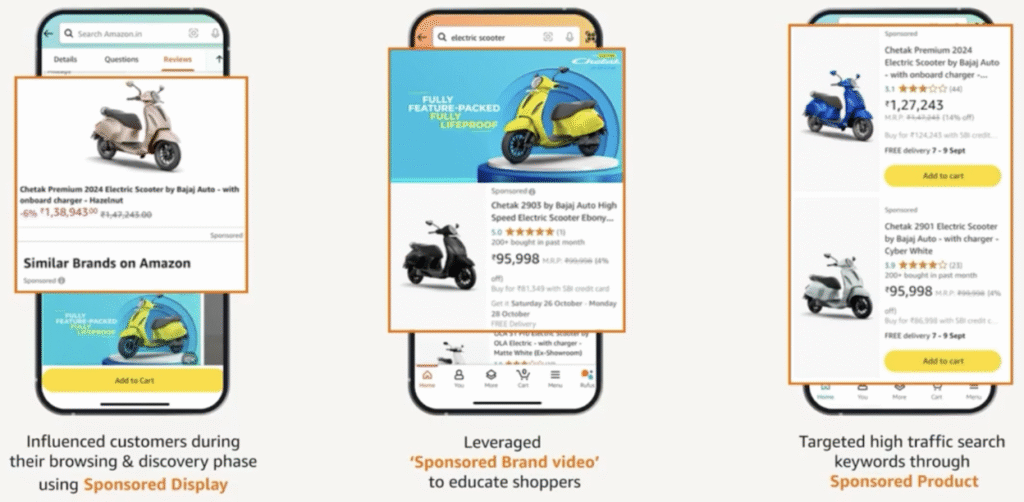
Automotive brands are leveraging e-commerce platform distribution for high-consideration purchases. Bajaj Auto Chetak extended beyond traditional dealership networks by launching the exclusive Chetak 3201 electric scooter on Amazon India during Prime Day 2024. By integrating with 90% of Bajaj’s dealer inventory, they enabled online orders with delivery from the nearest dealer. In the four days before the mega sales event, 24,000 people signed up for product notifications signalling strong purchase intent. During Prime Day, they sold one scooter every two minutes, achieving a 6x sales increase and capturing 30% of Amazon’s electric vehicle category.

ShopBack, a key player in the connected commerce space, illustrates another non-endemic model, creating value by connecting consumers across multiple e-commerce marketplace RMNs. Vivek Misra, Senior Director at The Trade Desk explains the approach. “What they do is give consumers the ability to get specific points across RMNs. If you’re comparing a phone across three e-commerce platforms, you get a deal. The value of that data becomes interesting specifically for intent. Someone is going there for intent, and that is what ShopBack monetised.”
The non-endemic approach succeeds when brands integrate into the RMN ecosystems where their audiences already transact, maintaining relevance through partnerships and co-branded offerings connecting to daily consumer behaviours.
3. Convergence Partnerships Connect Multiple Networks
Consumers move between e-commerce marketplace RMNs, superapp RMNs, and omnichannel retailer RMNs throughout their purchase journeys. A consumer might discover a product through video content, research it during a ride-hailing journey, compare prices across marketplaces, then purchase in-store. No single RMN type captures this complete journey. Convergence partnerships solve this by connecting data across network types, enabling marketers to target consumers based on behaviours spanning multiple platforms.
YouTube’s partnership with Shopee demonstrates how connecting content and commerce data changes what marketers can measure. The integration tracks consumer journeys from video viewing through to purchase, generating 42% add-to-cart increases and 30% engagement improvements. Marketers can reach audiences during content discovery moments, then measure which specific videos drove actual marketplace transactions.
Vivek identifies what makes these partnerships successful. “Partnerships succeed when the overall value to the partnership ecosystem increases for everybody. That’s how this becomes more successful: when people want to contribute and make the bridges happen.”
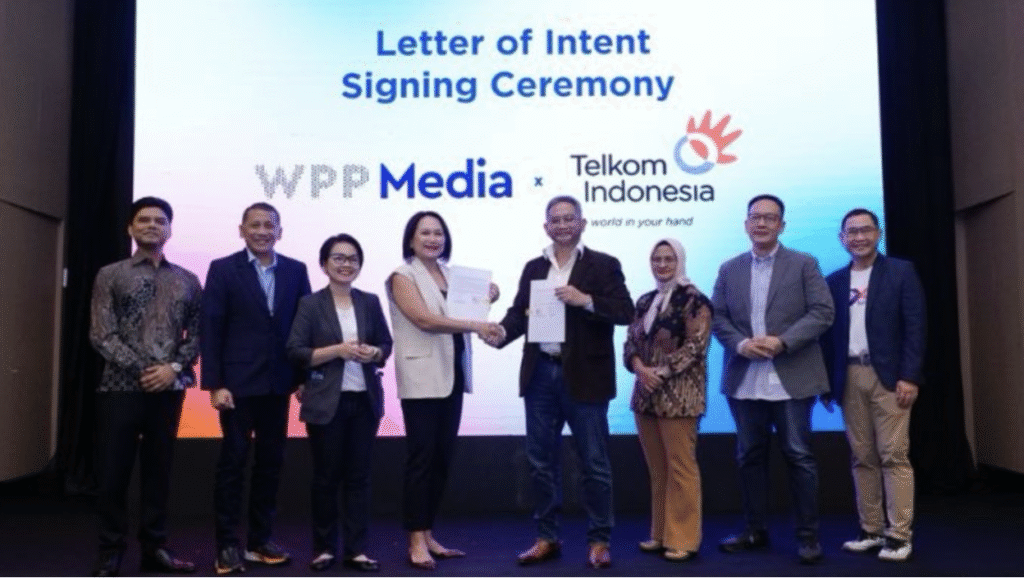
Regional partnerships show growing momentum, for example WPP Media and Telkomsel in Indonesia, connecting telco behavioural data with agency media capabilities. Though not a retail media network, this signals how non-retail data owners are becoming part of the broader commerce media ecosystem, with telco intelligence underpinning audience targeting and measurement in future omnichannel campaigns.
Another example is Indonesia’s Tokopedia-TikTok integration, while government-mandated, demonstrates the technical and regulatory feasibility of connecting social commerce and e-commerce platforms. This points toward how retail media could evolve into unified content-and-commerce ecosystems where creator engagement, ad inventory, and transaction data coexist within a single infrastructure.

Beyond partnership models, RMNs are investing in privacy-safe identity infrastructure to make measurement possible across environments. FairPrice Group have partnered with The Trade Desk on UID 2.0, enabling privacy-safe identity matching within programmatic buying. This collaboration makes FairPrice’s pseudonymised sales-conversion data available on The Trade Desk platform, allowing advertisers to measure how digital ad campaigns drive both in-store and online sales across its network of 570+ supermarkets and convenience stores reaching 90% of Singapore households. Brands can activate FairPrice audience segments across the open internet, including streaming, mobile, and gaming platforms, using The Trade Desk’s programmatic reach.

As Pallavi Singh, Account Director, DSP Partnerships & Marketplace at Magnite notes, “Identity is the next phase. The ability to match behavioural and purchase data across retailers will determine how fast the region moves toward commerce media.”
Multiple Networks Means Multiple Growth Paths
Retail media networks across Southeast Asia and India operate through four distinct types, each serving different strategic needs. Quick commerce platforms in India launched with first-party data capabilities embedded. Social commerce platforms built creator ecosystems and transactional capabilities together. Automotive brands found marketplace distribution for vehicle launches. Multiple growth paths exist simultaneously because networks launched with commerce and data capabilities integrated from inception.
Brands sequence investments based on market position. New D2C beauty brands build category leadership through single-channel focus, then expand distribution. Non-endemic categories maintain relevance through co-branded partnerships embedding them into marketplace ecosystems where their audiences transact. Convergence partnerships connect behaviours across network types – content discovery to transactions, mobility to delivery behaviour.
Mark identifies what sustains this model. “E-commerce will consolidate, but omnichannel retail will stay fragmented because no single retailer dominates regionally.” This fragmentation persists because consumer behaviour, retail formats, and transaction patterns vary across seven markets. The region’s network diversity is enabling marketers to match network capabilities to campaign objectives and build custom approaches across multiple simultaneous growth paths.
want to read more insights from the iab sea+india retail media council?
The IAB SEA+India Retail Media Council brings together expert insights and real use cases of Retail Media across the region, helping the industry navigate opportunities in Southeast Asia and India.